Finding Franklin II

Not even the chill of an overcast winter morning by the docks of the Tasmanian coastal town of Kettering could cool the enthusiasm of Matthew Garth in June 2022, as he chased answers to a mystery more than four decades in the making. 

The 65-year-old Sydneysider, once a Navy man turned helicopter pilot, wound up at the town’s ferry terminal having spent the month prior scouring the bays of Tasmania – starting north, working south – seeking a lost love on which he last laid eyes in 1977, aged just 20. 

It had been 45 years since Matthew last saw Franklin II – a grand, 43ft wooden yacht once an icon for those, like him, who attended the Royal Australian Navy College at HMAS Creswell in Jervis Bay, New South Wales, in the halcyon days of the 1970s.
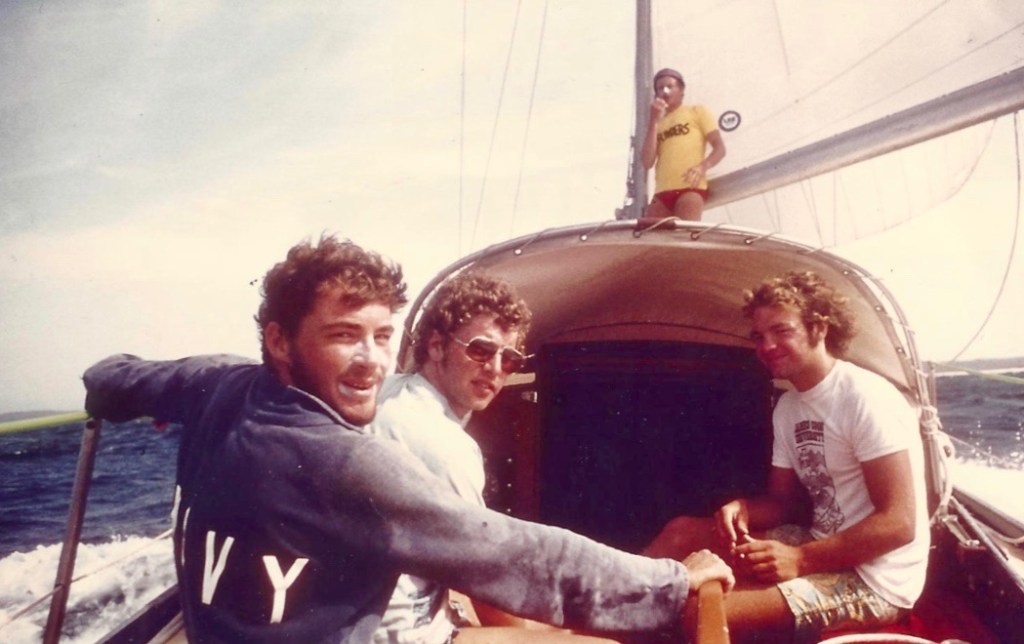
Students of the Royal Australian Navy College aboard Franklin II in 1976.
Pic: Supplied by Matthew Garth

A veteran of an incredible 12 Sydney to Hobart yacht races between 1962 and 88, Franklin II was once a Aussie Naval stalwart – a staple for those who cut their teeth at the college. But she had inexplicably faded into obscurity after leaving military hands in the mid-1990s.

To Matthew’s knowledge there was not a photo or a sighting in almost 30 years. Forty-three feet into thin air. How does a yacht with such presence and history just disappear?

He had spent many years physically and digitally searching for an answer to that question, and on this wintery day believed he may well be a short ferry ride from an answer.

Australian stories like that which drove Matthew to Kettering are usually played out over a few beers at the local pub. They’re thought bubbles that are touched on and dreamed about. The sort of thing Paul Kelly or Jimmy Barnes might write a song about. 

It’s rare to see a story like this followed to conclusion. But Matthew believed he was close to becoming an exception.
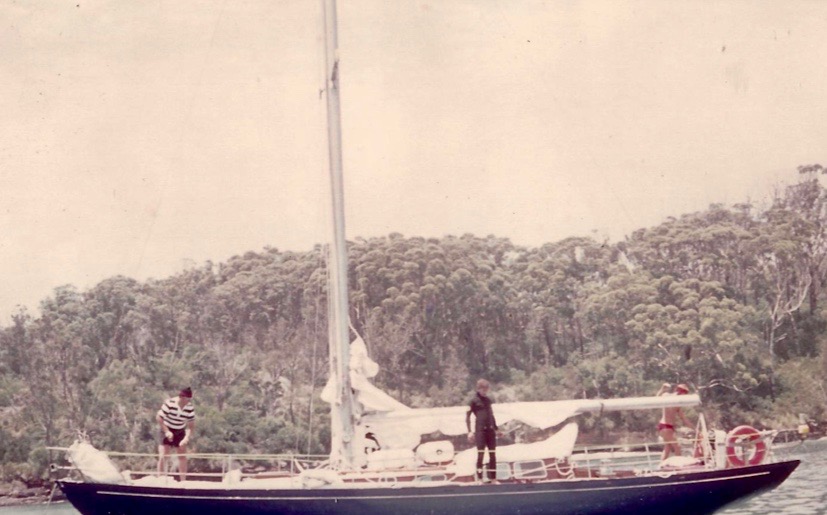
Franklin II in 1976. Pic: Supplied by Matthew Garth

Franklin’s first impressions, Matthew’s stoic search

Franklin II, Matthew explained with coffee in hand ahead of the 9.50am ferry to Bruny Island, was the vessel which most captured his 16-year-old imagination when he began a four-year Navy training stint in 1973. 

Built on Garden Island in 1962 and named for the Tasmanian Governor Sir John Franklin, the yacht was unlike any other Navy boat of its era. It was a fixture of the fleet, on which thousands learned their trade over the decades on the waters around Jervis Bay.

Franklin II was once known for its prominent shape and distinctive paint job – a deep blue with a gold trim designed to replicate the former royal yacht Britannia – which after an esteemed career at sea is now retired and stationed at Edinburgh in Scotland.

Franklin II in the 1968 Sydney to Hobart.
Pic: Sydney to Hobart

While the Queen’s former ship became an international tourist attraction, Franklin II would vanish. After a brief stint with the Army in the early 1990s, the ship was sold into civilian hands in 1995 and disappeared from public awareness shortly after – an Australian sailing mystery worthy of Bermuda Triangle mythos. 

She became the fodder of conversation over drinks, emails and text messages between Navy veterans. Those conversations were fruitless, and the questions around what came of Franklin II endured with no leads throughout the 2000s. 

It was a disappearance that toyed with Matthew’s mind.

After years flying choppers in the North West, his pursuit of an answer escalated on his family’s return to Sydney from WA in 2013, when he started kayaking around the marinas and harbours of New South Wales in search of the yacht. 

“For some reason I had in my mind that she would be in the main harbour at Sydney – the sort of place you expect to find such a grand yacht like Franklin,” Matthew said. 

The expeditions would come up blank, and for many years the pursuit looked dead in the water. However, an unexpected lead would soon emerge and set Matthew on a path for the Apple Isle.

In 2021, the recently retired Matthew spotted a feature story published on Defence News – a government website maintained by Navy staff – which offered his first concrete lead on Franklin since 1977. He learned the yacht had been restored in private hands and was headed to its new home, somewhere in Tasmania.

He did the only logical thing.

“I went to the north of Tassie in May to continue my search, stopping at marinas and calling yacht clubs trying to track her down,” Matthew said. 

As he was about to call off his search, Matthew received a tip from the Wooden Boat Guild of Tasmania. On June 23, it put him on a path for the ferry from Kettering to Bruny Island.

The Neck at Bruny Island, taken from Truganini Lookout.

Brothers in arms

Peter Schwartz stood casually at the Bruny Island Ferry Terminal, waiting for a visitor he’d never previously met. 

A retired builder with an accent which pays ever so slight homage to his American heritage, Peter couldn’t have found a better place to embrace his long-held passion for the sea. 

He and partner Karen recently relocated to the island from New South Wales. The couple live at Sykes Cove – a secluded spot where they purchased neighbourless waterfront acreage many years earlier, before the market took off. 

Peter’s current project is a self-sustaining forever home, built to look out over the water and take in the sort of vista you could spend a lifetime searching for.

In some ways, Matthew had.

Peter and Matthew had previously spoken only by phone, but they greeted one another warmly, quickly piling into a car and taking off into the island.  
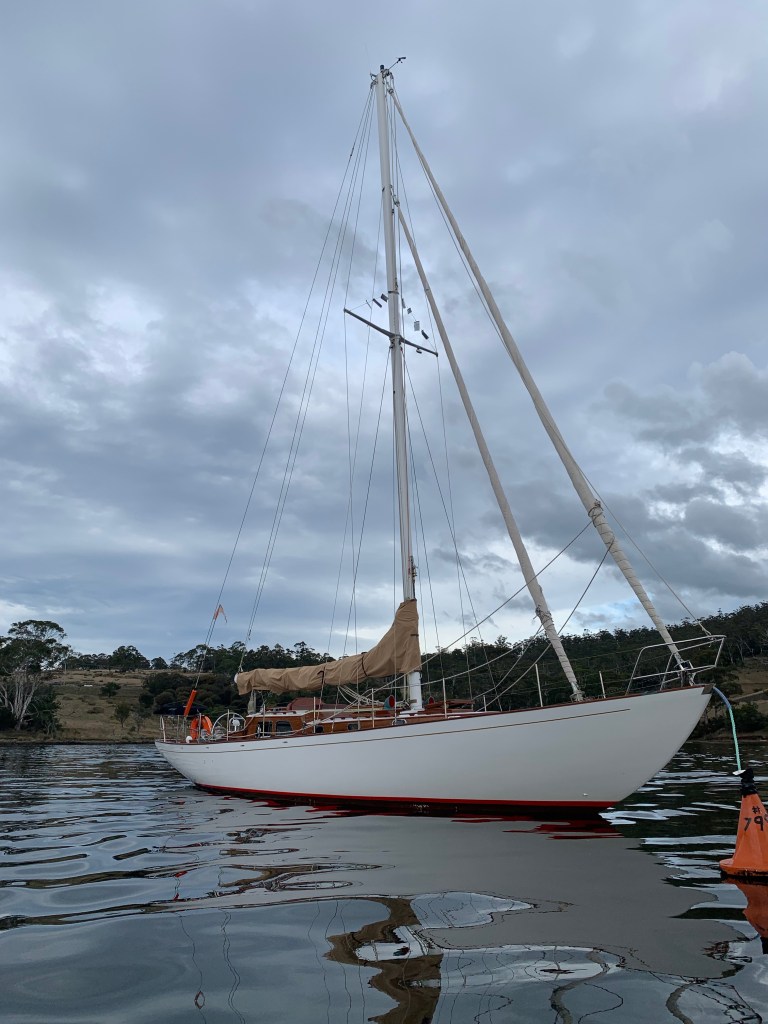
Franklin II in 2022, off Sykes Cove at Bruny Island.

After about 10 minutes, the vehicle strained past a tree clearing on a cliff overlooking the cove Peter calls home. 

It was here, from the passenger side of a beat-up sedan on a small Tasmanian island, that Matthew laid eyes on Franklin II for the first time in 45 years.

In the cove waters below she rocked gently and alone – no boat in sight save for a small metal dinghy tied to a post near the shore. 

No longer the royal blue of her youth, in 2022 she’s finished in off-white, with golden stripe remaining and a near-immaculate wooden finish to the deck. 

“I never would have found her here,” Matthew muttered under his breath. 

“You would have had a hard time finding her anywhere,” Peter replied. 

“We had her off the water for the best part of 20 years.”

How did Franklin get here?

In the most ridiculous way imaginable, of course. While some of us were trading Pokemon, Peter was swapping boats. And in 1996, he traded a 33ft fiberglass boat to a corporate high-flyer from New Zealand for Franklin II, which after a brief sailing stint was put into a NSW store yard for 22 years. 

Here Peter worked off and on in his spare time over the decades, before the pandemic refreshed his enthusiasm for the project and proved the ultimate catalyst which put her back on the water. That’s a feat in itself – it’s estimated just 50 per cent of the projects in the Taren Point store yard make it back out.
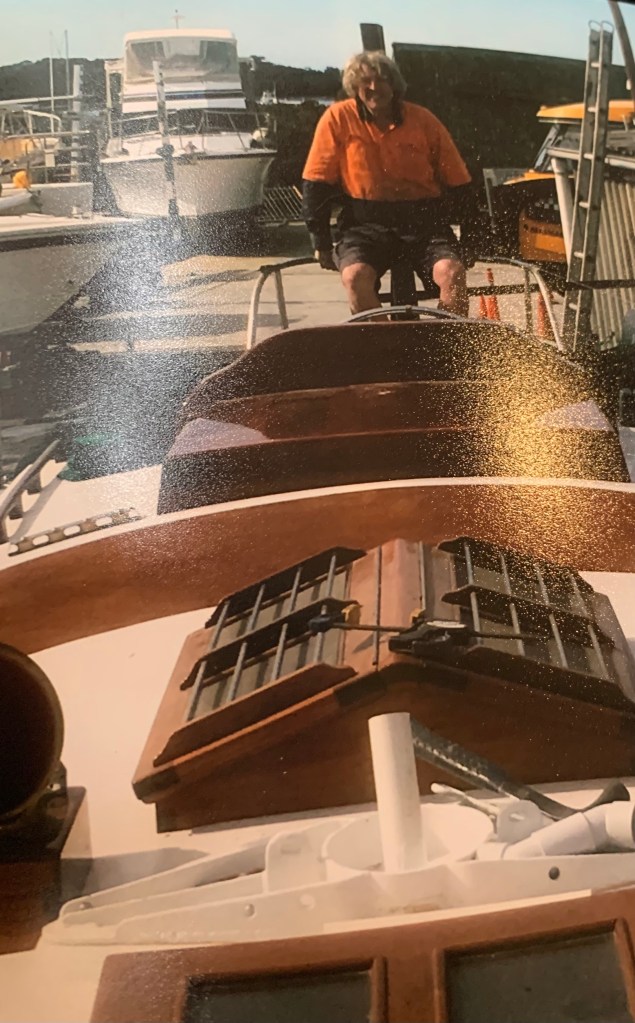
Peter at work on Franklin II – a photo of a photo.
Pics: P. Schwartz

Had Franklin II been in less caring hands, and with less support from knowledgeable shipwrights who helped advise the process, there’s a fair chance her story, and Matthew’s search, could have ended at a New South Wales tip.

Instead, the yacht was rebuilt and refurbished with utmost respect for its past, and a view to a future on the Tasman Sea.

Franklin II finally made it back to water in December 2020. In April, Peter and Karen were invited by the Navy to sail back to Jervis Bay, and presented with the boat’s original nameplate and plaques recording her adventures in the Sydney to Hobart races. 

The account of this event penned for Defence News mentioned Peter and Karen’s intention to take the boat to its new home in Tasmania – and became Matthew’s Tasmanian lead, though a misspelling of their surname set him back to some extent. 

But finally, after about a month on the road, Matthew would soon have his moment at one of the southernmost points in the nation.

He was about to sail on Franklin II once more. 

One man’s life work, another’s life mission

Peter reels in a dinghy, with Franklin II in the distance.

Peter was soon trudging his boots through the shallows of Sykes Cove, reeling in the dinghy beneath ominous skies.  

Before long, with Matthew at the wheel and Peter pulling ropes, the 60-year-old Franklin II was gracefully sailing across the Tasman, hitting a speed of seven knots as it carved its way through the grey waters surrounding the island. 

Matthew takes the wheel, 45 years since he last set eyes on Franklin II.

Matthew asked question after question, and told of the yacht’s significance to those who trained at HMAS Creswell during his era. 

Peter shared his experience with the yacht – filling puzzle pieces which had eluded the knowledge of even the most diligent of Naval historians for decades.

For Matthew, it was a real-life dream moment – one which took him back to the age of 16, and the resolution to a search which most would have abandoned long ago. 

“Sometimes you’re asleep and you’re dreaming, and occasionally you’re awake but it feels like you’re dreaming,” he said at one point, with eyes glued to the ocean ahead.

The yacht sailed for around two hours – perhaps a touch longer – with the overcast conditions doing little to dull the duo’s enthusiasm. 

With the dark beginning to set in, the pair eventually decided it was time to call it a day.

Matthew got one last glimpse of Franklin II on the drive back to the ferry terminal. At least for now. There’s talk of an overnighter on the yacht at some point soon.

A life’s work (left), a life’s search (right).

Despite that, a significant chapter was now closed. As he rode the ferry back to Kettering ahead of a drive into Hobart and a flight home to Sydney the following day, Matthew was introspective.

“At 60 she’s a little younger than me, but I’m sure she will long outlive me and bring joy to many more sailors for at least another 60 years,” he said. 

There’s probably a Paul Kelly song in that, too.

In pursuit of a monster: lessons from Loch Ness

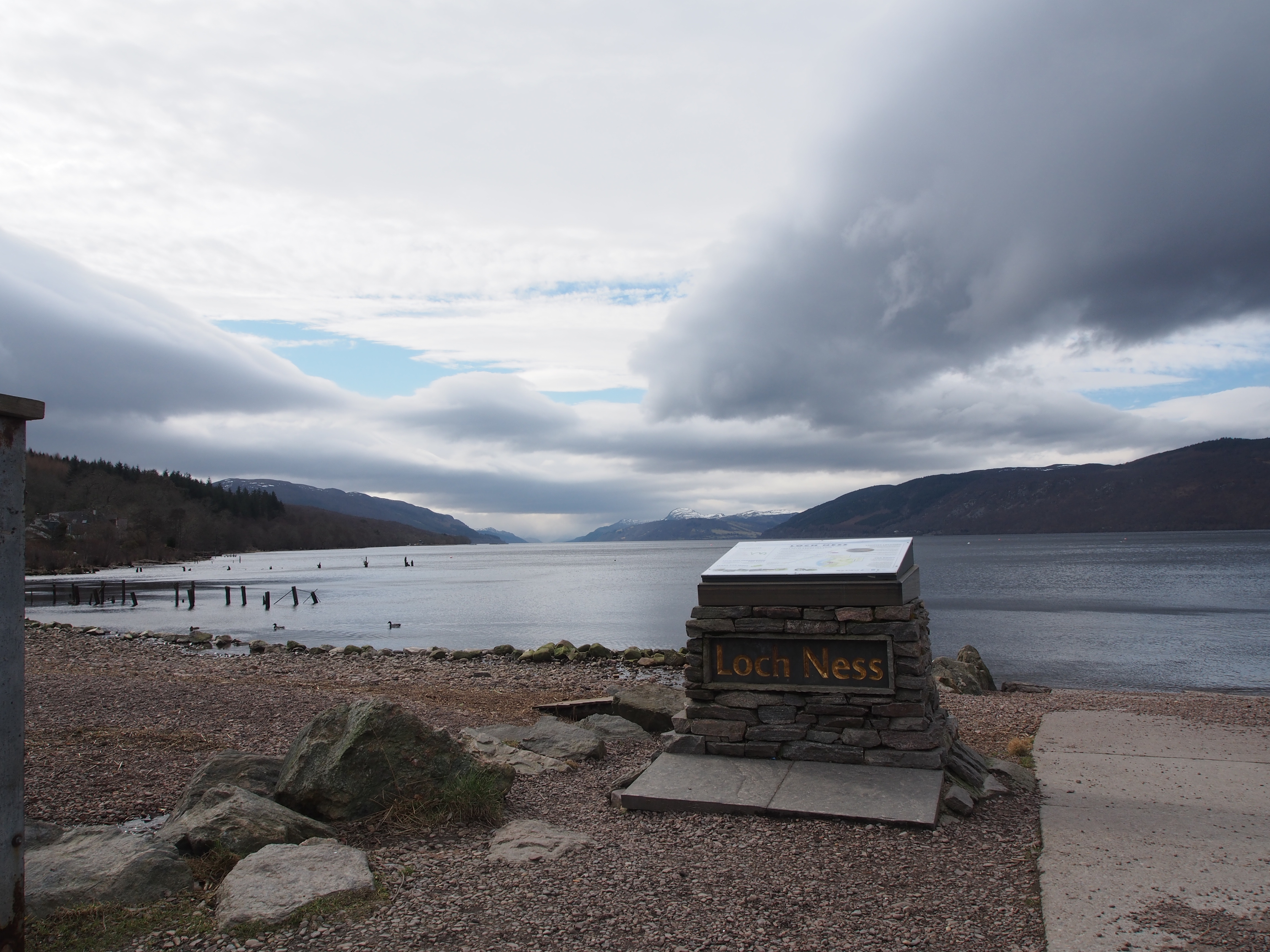
SCOTLAND’S famous Loch Ness has a mystic aura. The waters are surprisingly rapid, the winds heavy, and its sheer expanse contrasts dramatically with the jagged cliffs and mountains which frame it.

If a sea monster was ever to emerge from the depths and expose itself to humanity it wouldn’t look out of place here.

This is a circumstantial observation of course, heavily influenced by the legendary monster sightings which have made Loch Ness a household name. If not for the loch’s elusive cryptid, its claim to fame would be its status as the second deepest water body of its kind in Scotland. That’s not boring, but it pales in comparison to the legend of a living aquatic fossil.

OLYMPUS DIGITAL CAMERA

I visited the loch on a blustery March morning not in pursuit a beast, but for insight into what might have been had I followed a dream floated a decade ago in a conversation about career and life.

It was then I decided I wanted to be a cryptozoologist – one who hunts and studies the mythical beasts which capture imaginations across the globe.

The career was a hard sell and I ended up a journalist. However, the interest persisted, and having come into enough cash for flights through sheer luck (a scratchie card) I booked a trip in the hope of meeting someone who’d done what I’d dreamed of doing years before.

That’s how I came to meet a monster hunter.

Origins

Twenty-seven years ago, Steve Feltham decided he’d had enough.

Tired of installing burglar alarms in partnership with his father – a career he openly hated – Steve sold his south England home with a view to chasing his dream.

Without further context the scenario is not all that unfamiliar. Stories abound of successful people who left career jobs to chase passions. The psychology of sea change is interesting, but the act is not particularly uncommon.

image2
Are you?

For Steve, though, things were a little more complicated. Instead of a record store or a restaurant or a career in freelance journalism, Steve gave his career away in a bid to solve the mystery of the Loch Ness Monster.

Every morning since 1991, when the then 28-year-old upped and relocated to an initially mobile and now very stationary converted library van on Dores Beach, Steve has woken up to the lapping of the famed loch with an open schedule and mind.

His dedication to finding the Loch Ness Monster has become something of legend in its own right, garnering a BBC documentary, Guinness Book of Records recognition and a number of alarmist Daily Mail headlines over the years.

Despite the attention, and a full-time search which started as the Cold War ended, he’s yet to conclusively find the beast.

A day in the life

OLYMPUS DIGITAL CAMERA
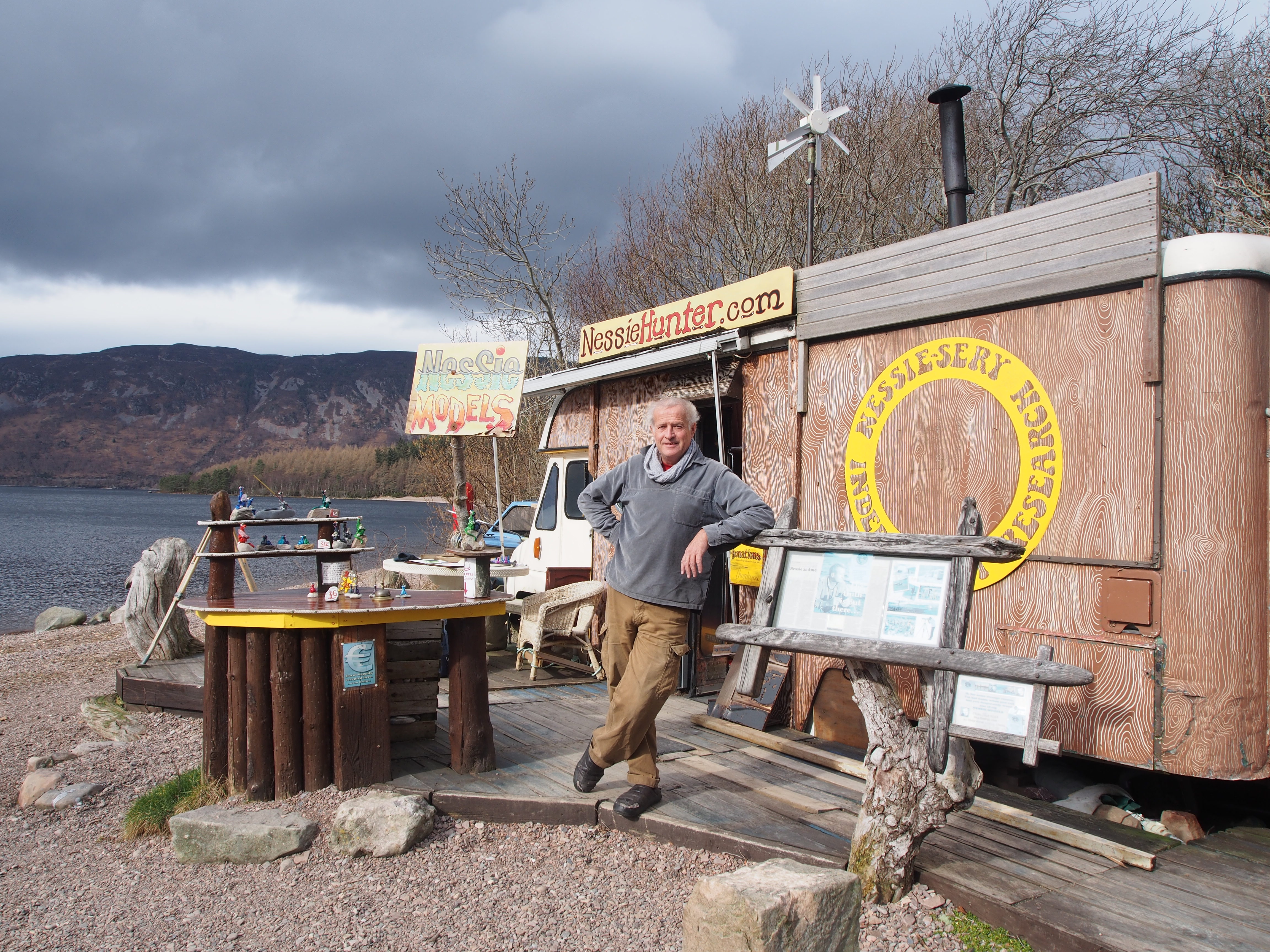
Steve outside his converted library van home. 

Steve spends his days making models of the monster to sell to tourists and sustain his lifelong adventure.

When it’s calm he’s behind a set of binoculars looking for any hint of activity on the loch. On this particular day he put them to one side to tell me a bit about the mystery which has gripped him since first visit in 1970, and the life he’s built since.

“I came here on a family holiday when I was seven, and that’s what got me hooked on the subject,” Steve said, pausing briefly to stare out across the water.

“We went to see the green field over there. In that field was the Loch Ness Phenomena Investigation Bureau, with all their cameras and caravans – they’d built a platform with a camera on a tripod and a lens about a metre long.”

The late 1960s and early 1970s were an interesting time in the history of the Loch Ness Monster narrative. The Loch Ness Phenomena Investigation Bureau Steve spoke of was a volunteer body which believed a plesiosaur lived in the depths of the loch, and spent every summer for around a decade trying to find it.

The group comprised some esteemed names, including conservative politician and founder David James, author of More Than a Legend: The Story of the Loch Ness Monster Constance Whyte, and Tim Dinsdale, himself an authority on the topic whose books detail his efforts to uncover the beast throughout his lifetime.

For an inquisitive child, this work proved a spark which ultimately took hold.

image1
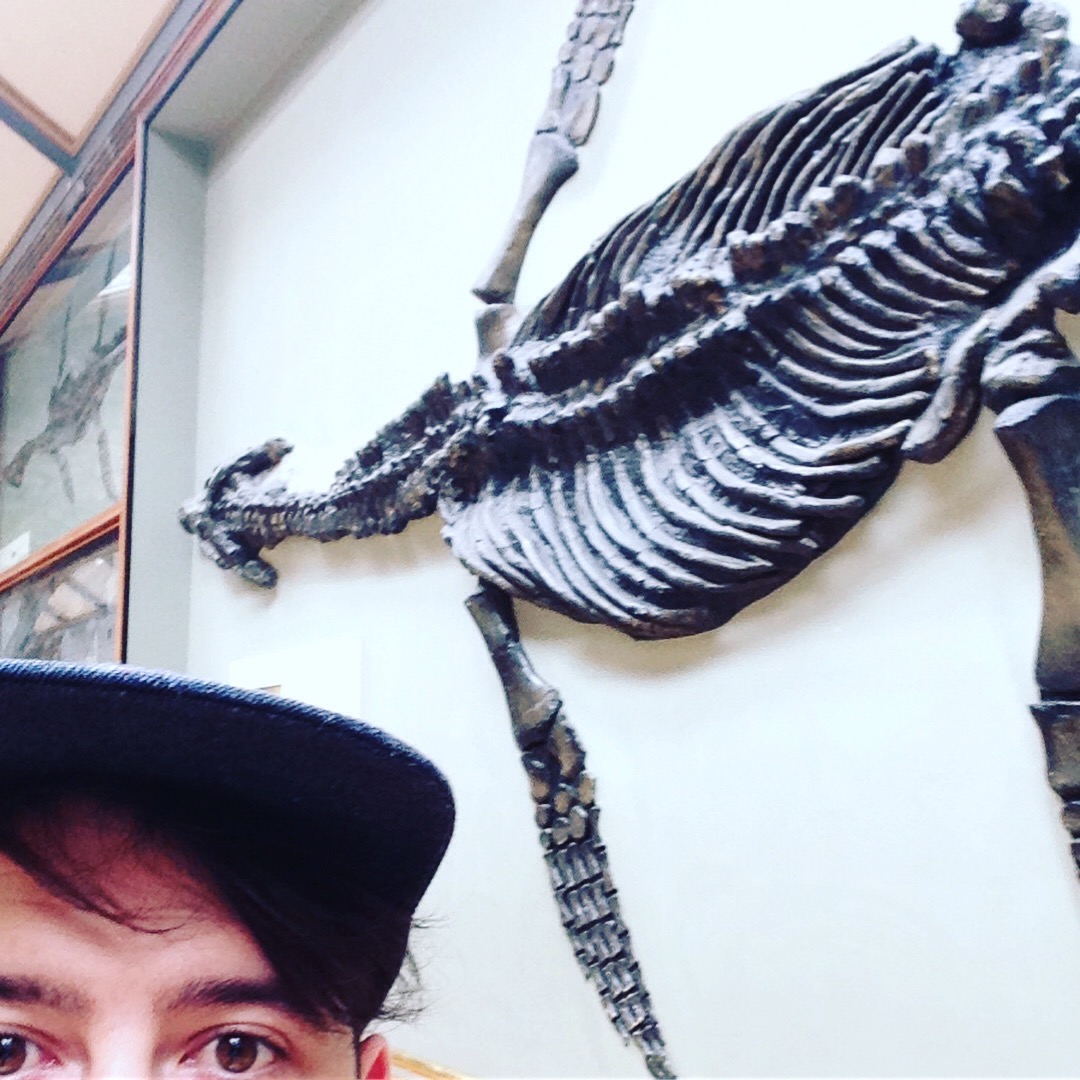
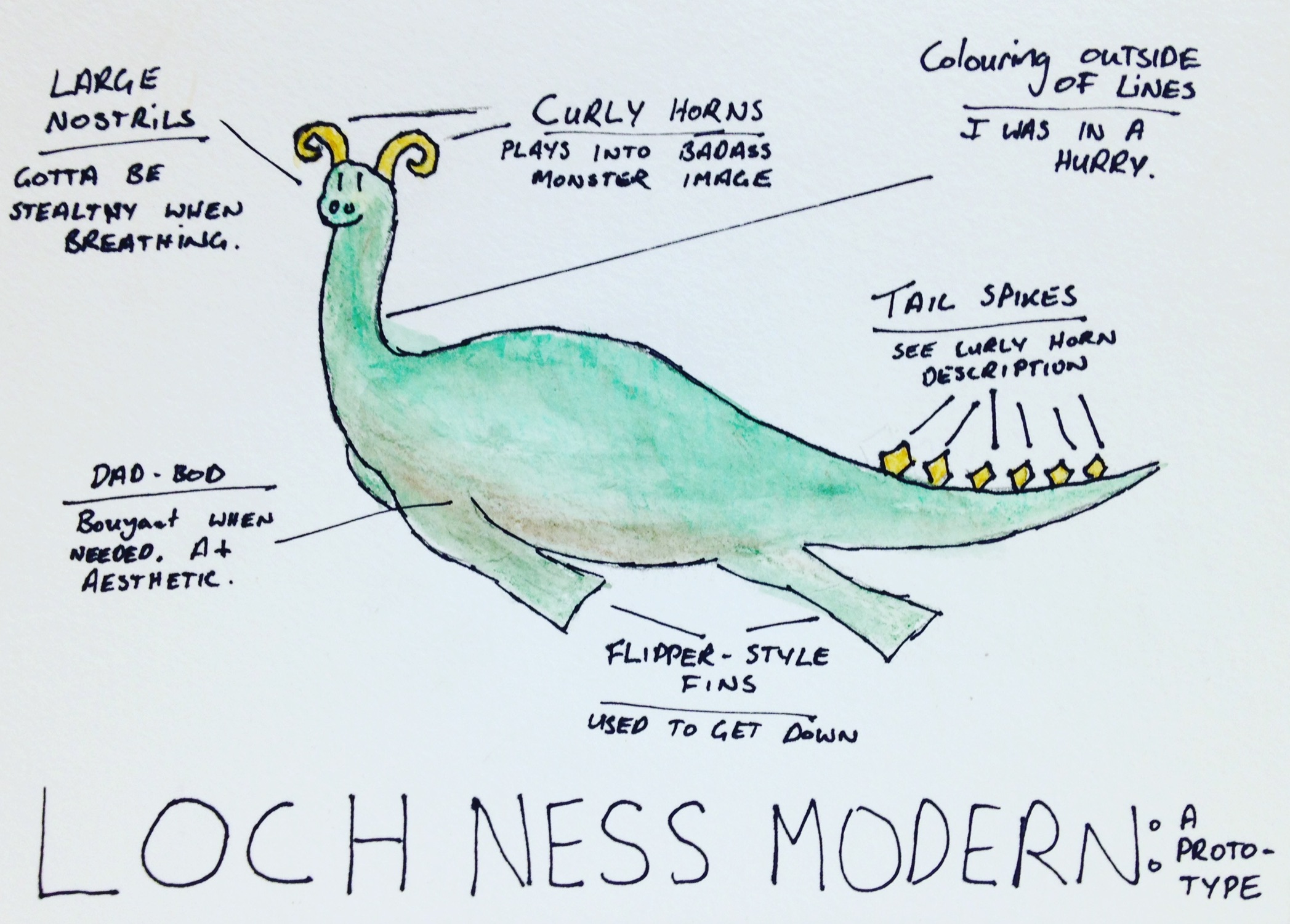
I found a plesiosaur, albeit at London’s Natural History Museum.

“I was a seven-year-old boy watching grown men and women look for plesiosaurs,” Steve said.

“It just caught my imagination that that would be possible in this country – my interest grew from there.”

Books were read and theories developed. Several more family holidays to the loch served to keep the flame burning through the years and into adulthood, when every spare moment of Steve’s was spent by the waters of Loch Ness.

“I was a seven-year-old boy watching grown men and women look for plesiosaurs”

“It was then I realised coming up here and doing this, even just for a week or two on holiday, filled me with so much joy and contentment,” he said.

At 28, he packed up and made it his life.

Career

The continued elusiveness of the monster may paint Steve as a failure to some – he claims to have seen something just once in almost three decades full-time on the loch. But it was clear almost immediately that his pursuit is as much a lifestyle as it is a life’s work.

The clues lie in his surrounds. Dores is an ATM-less Scottish throwback town of around 100 which is known for its inn, beach and Steve. The three share a car park. The young staff at the inn openly call their town ‘backward’. Quaint may be the better turn of phrase, at least as an outsider.

Beyond Nessie, Dores has allowed Steve to create a life he could only dream of on cold winter mornings working in Dorset and the cash-driven mentality of his past life.

“I think initially I had the work-life balance right,” he said, looking back on years gone by.

“I think initially I had the work-life balance right”

“I spent 10 years working in various creative pursuits. I was a graphic artist and a potter and a book binder – in those years I was coming up here in my spare time.

“But the mid-80s in this country was Thatcher’s era and all about money, so when my dad retired from the police to set up a one-man operation installing burglar alarms, I quit the creative work and went into partnership with him.

image4
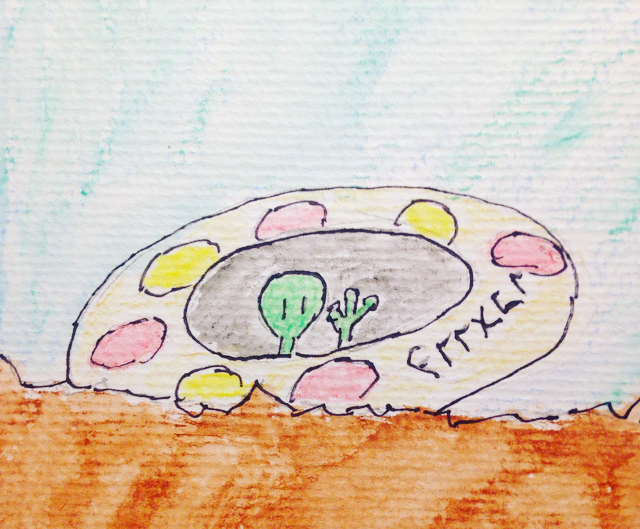
Is there an alien at the bottom of Loch Ness? One theory says so

“I instantly hated it.”

One of the few benefits Steve saw in his work was the opportunity to talk to older people – those outside his sphere who offered insight by virtue of their life experiences.

He heard story after story of adventure and regret. In the long run, Steve said these conversations served as a trigger.

“They’d make you a cup of tea and tell you all the things they wished they’d done, or the things they had done in their lives,” he said.

“I realised at my rate I was going to get to my deathbed and look back wishing I’d tried to find an adventure full-time at Loch Ness.

“The fear of the unknown was less than the fear of the regret at the end of my life, so I decided to do it.”

Drawing from his own experience, Steve said he believed there was merit in working a job you hated.

“There’s nothing that focuses the mind more than getting up on a cold winter’s morning to go do something you don’t want to do. It helps you work out what you do want from life,” he said.

“The fear of the unknown was less than the fear of the regret at the end of my life, so I decided to do it”

“It doesn’t matter what anyone else thinks of what you want to do with your time, if you can lock onto it with the conviction that it will work, no matter how odd it may be, there’s a joyous time to be had out there following your heart rather than your wallet.”

Nessie

One sighting in 27 years seems a worryingly low strike-rate for a full-time monster hunter.

On what he’s seen, Steve’s opinion has changed.  He no longer believes there is a plesiosaur in Loch Ness as he did in the beginning. However, he holds firm that the 54 square kilometre loch holds secrets undiscovered.

“There’s a whole range of different things people believe could be the explanation,” he said.

“It could be catfish, sturgeon, giant eels, there’s one guy who believes there’s a space ship at the bottom of the loch – whatever pops up to be the explanation is what I’ll photograph.”

image3

Steve’s continued conviction comes from his faith in the people he knows. Respected peers have confided in him time after time. His goal is simply to credibly catch the source of the mystery on still or moving film.

“I’m convinced mostly, not because of the photographic evidence which is all pretty sketchy, but the reliable, local eyewitnesses,” he said.

“These are people who have lived on the side of this body of water all their lives and know all the false alarms, and then one day they say ‘I’ve seen the back of a big animal with water spraying off the sides as it courses through the bay.

“Hearing that from somebody who would never tell the outside world what they’ve seen but knows I’m not here to take the mick – that’s what keeps me convinced.”

And if he one day solves the mystery?

“That would be fantastic for me, because presuming it’s me who gets the final piece of information, the adventures to follow would be so unpredictable,” he said.

“I’d love to know what invitations would come of that. Once you’ve solved this mystery, any other seems like a walk in the park, really.”

Screen Shot 2018-04-16 at 8.33.56 pmBut for now, as it has been for more than a quarter of a century, Steve’s full-time focus is firmly on the Loch Ness Monster. No other mystery has captured him in quite the same way as the one he first learned of as a seven-year-old.
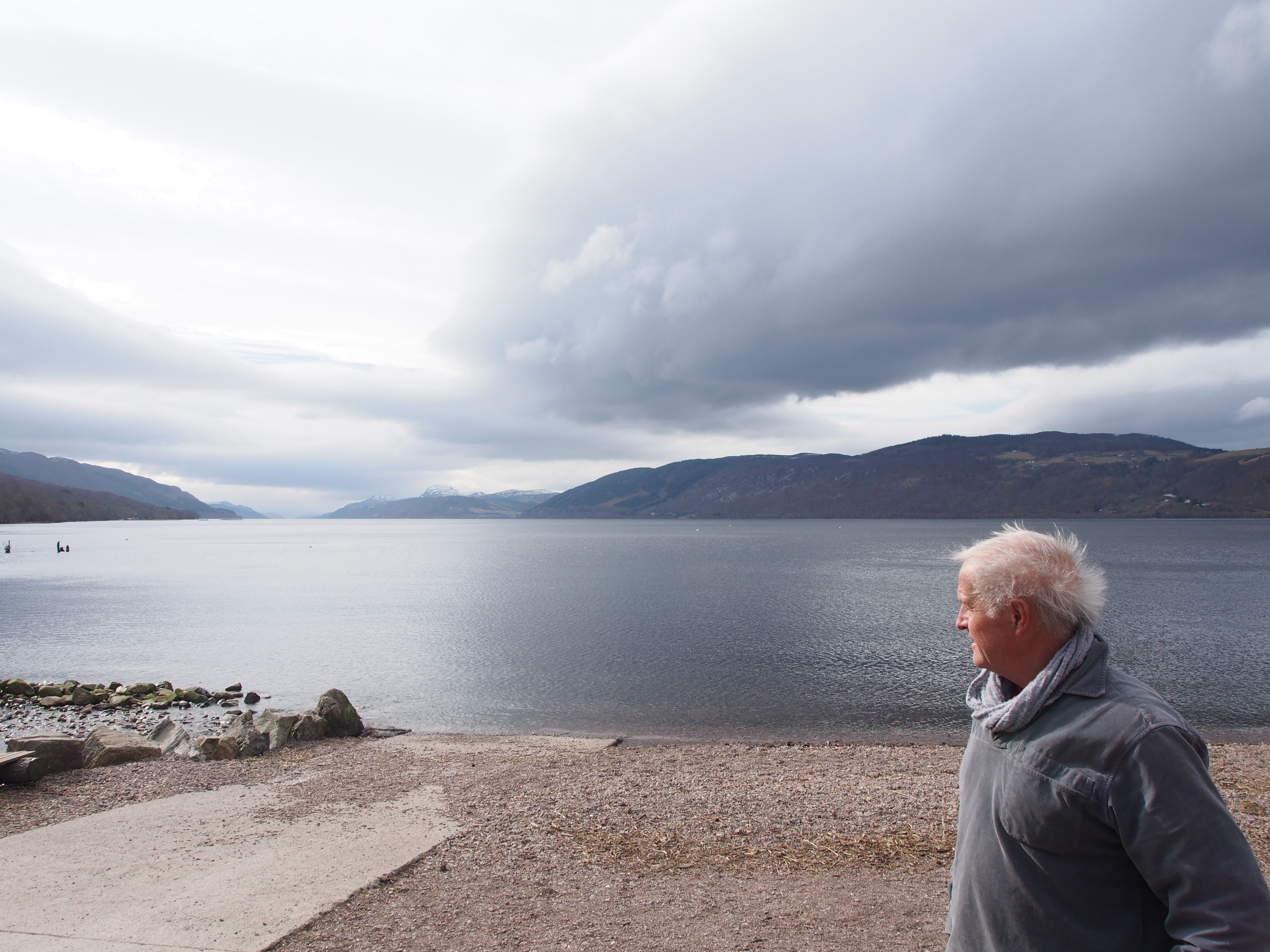
“I have been invited to look for Selma in Lake Seljord in Norway, and there were a few other exhibitions I’ve spoken to people about that never came off, but I’m happy with this one,” he said.

“People assume I have a biding passion for yetis and everything else, but this is the one thing I’m fixated on – it’s here in this loch.

“The beauty of living here is knowing the answer is in this stretch of water in front of us, it’s not like being a yeti hunter and wandering off into the Himalayas.

“That and the view. I’m as content now as I was on my first day at Loch Ness.”

OLYMPUS DIGITAL CAMERA
Steve’s search for the Loch Ness Monster is ongoing.

Text, photographs and illustrations by Jack McGinn, 2018. 

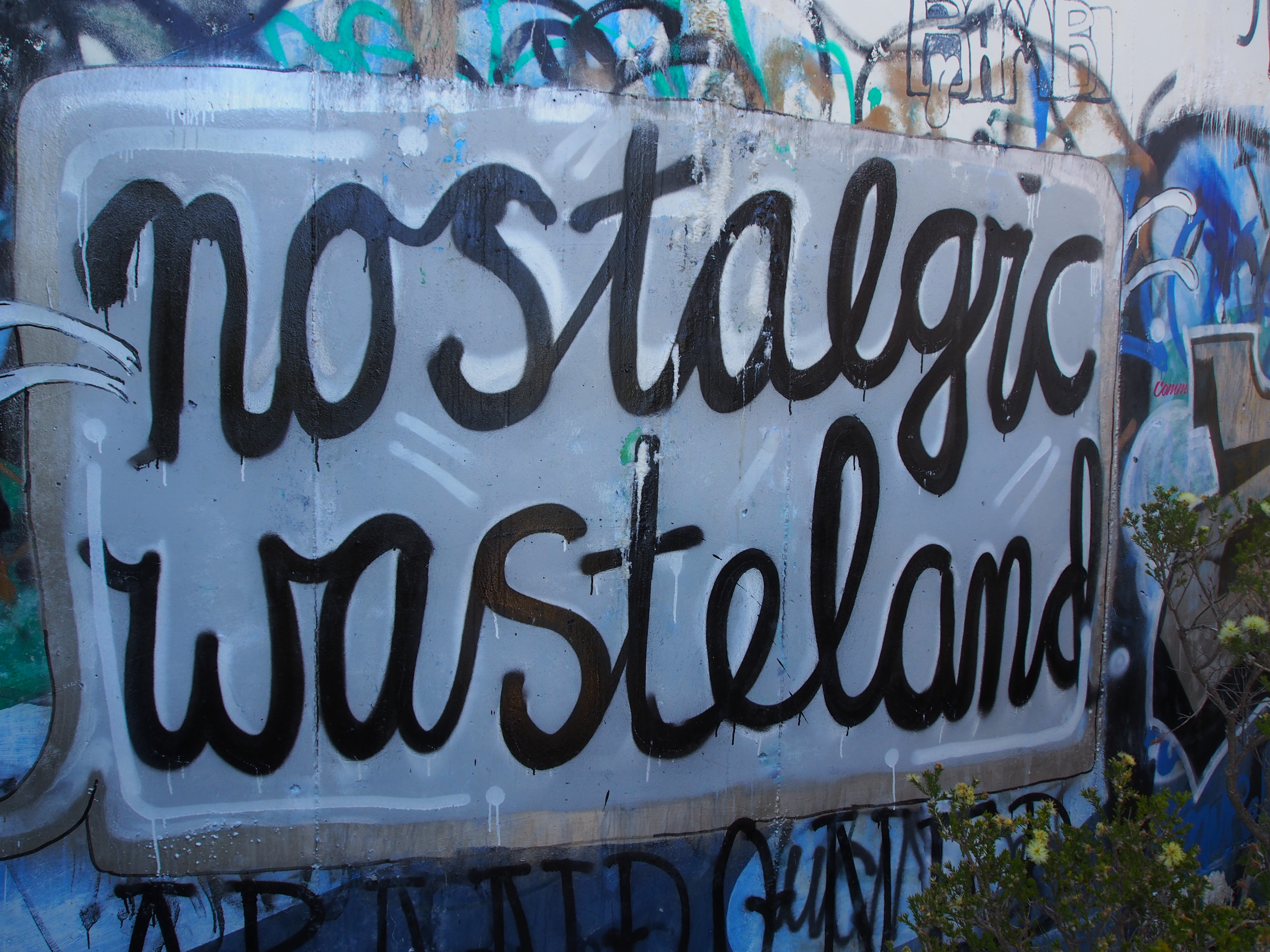
Nostalgic Wasteland: From Atlantis to Antarctica

A derelict titan of Western Australian tourism, the sheer mention of the Atlantis Marine Park near Two Rocks was once enough to elicit story after story of sunburn, sea mammals and limestone sculptures.

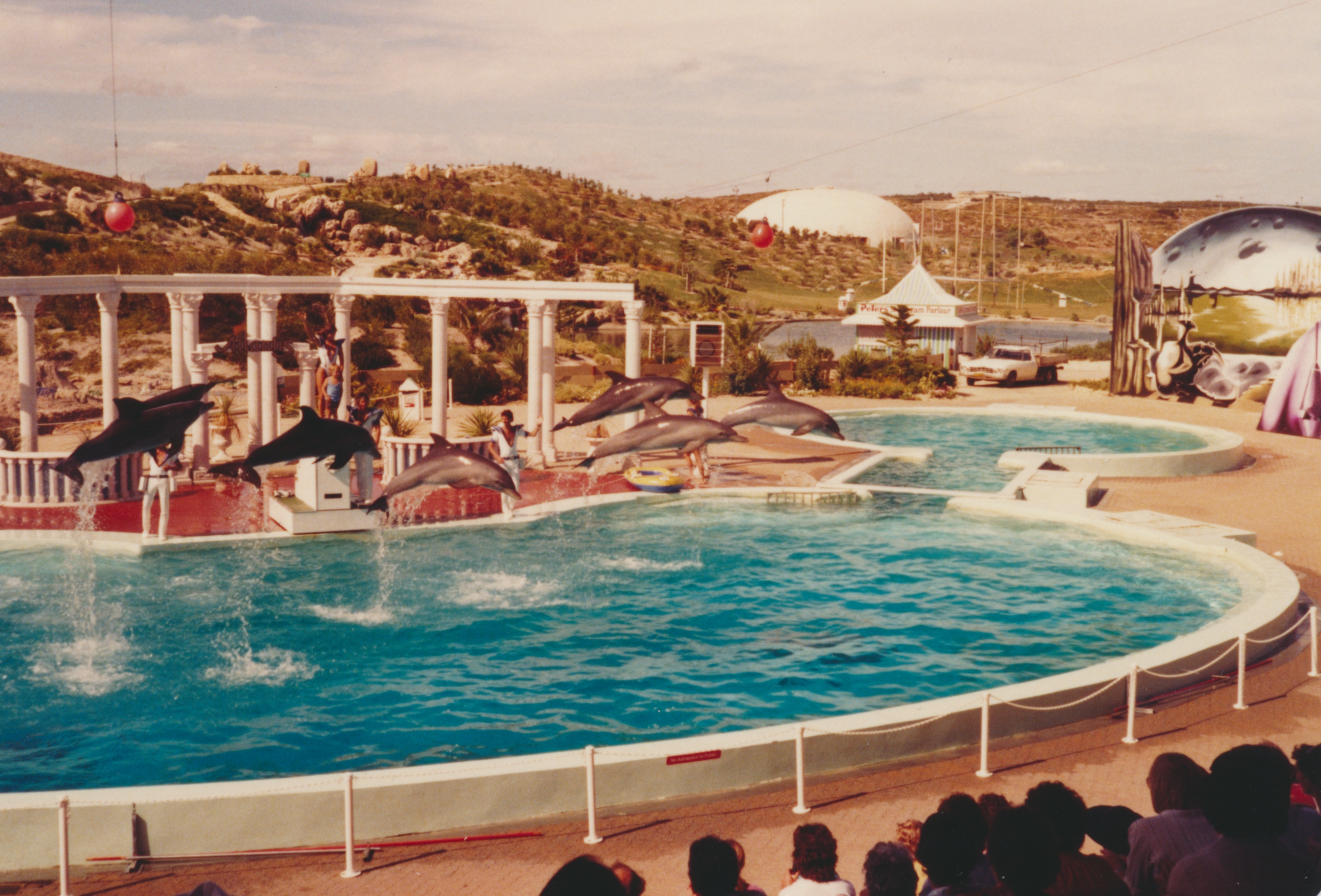
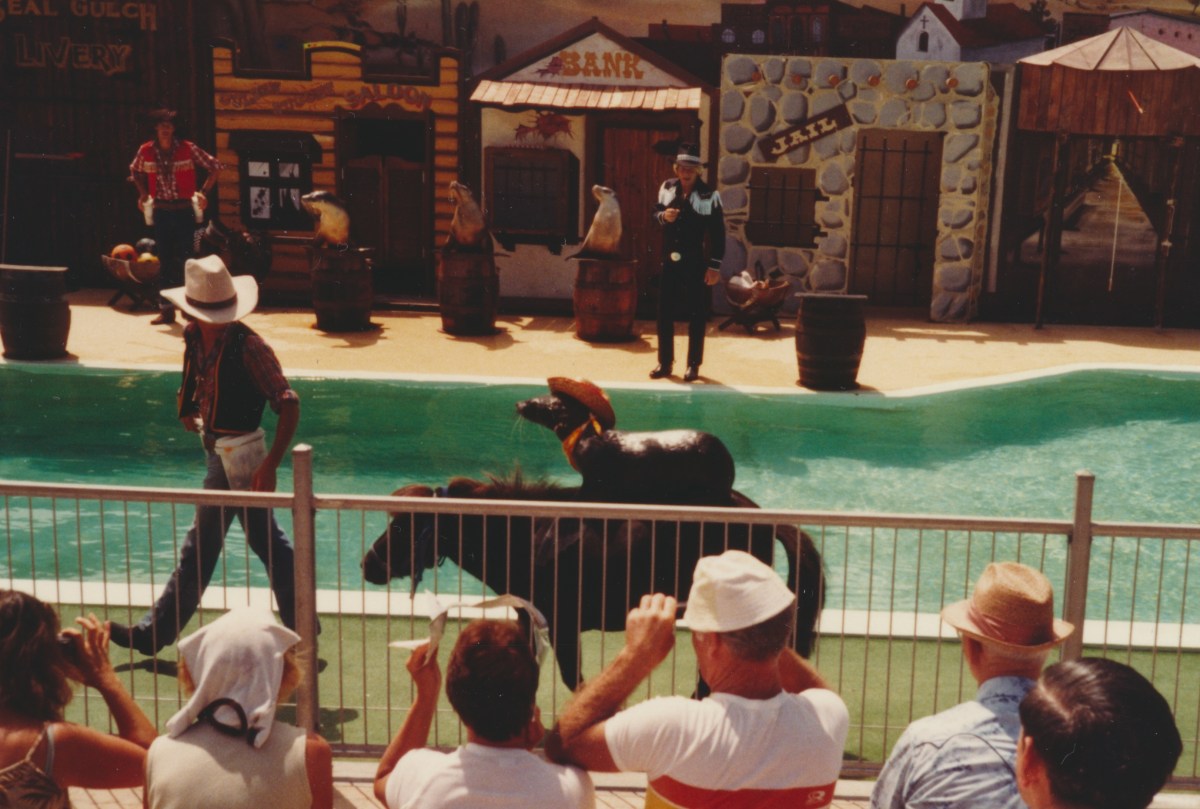
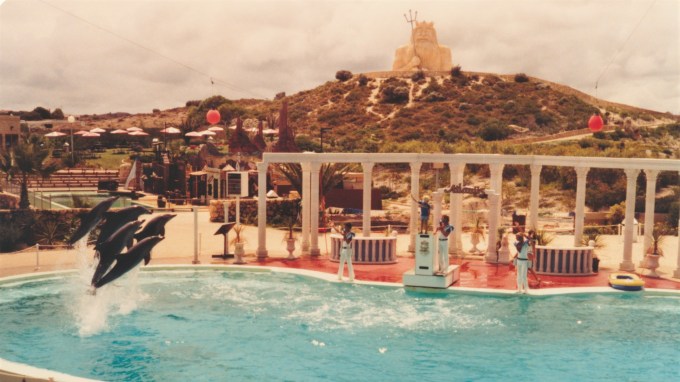
Hundreds of thousands of Western Australians took the trip up the coast to see the park at its peak in the early 80s. What they saw was dolphins flipping on command, seals (occasionally riding horses), turtles, pelicans, penguins, swans – all the things you could expect from an experience once billed ‘the greatest spectacle the west has ever seen’.

tune2-2

Watercooler conversation and reminiscent Facebook post aside the plight of Atlantis has been largely relegated to the photo albums of the state’s suburban middle class and the social media snaps of their offspring.

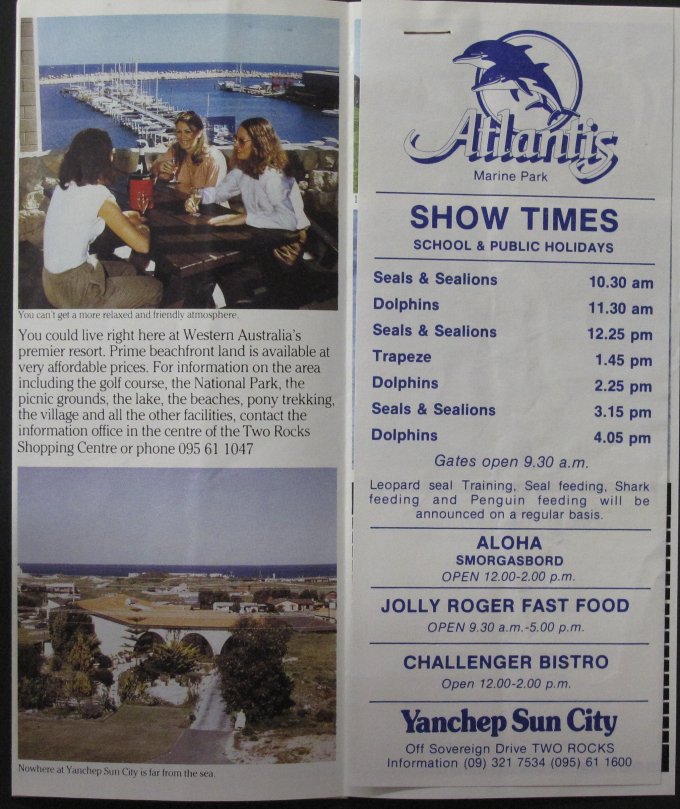
To say it was never meant to end this way would be a stretch – Atlantis was essentially set up as a short-sighted land sales technique by the Japanese corporation Tokyu and part of the broader Yanchep Sun City plan which never quite filled its potential.

The plan was to encourage people to recognise the beauty of the coastal land north of Perth and then sink a bunch of cash into it. People certainly flocked north, but the vision once held for the area went largely unfulfilled and forgotten.

The impact on the region wasn’t all short term. In stark contrast to the mythical city after which the park was named, the ruins of Atlantis Marine Park are there for all to see. Two Rocks is so sleepy a fishing town that the land on which the park once stood has sat largely untouched for decades.

OLYMPUS DIGITAL CAMERA
Majestic.

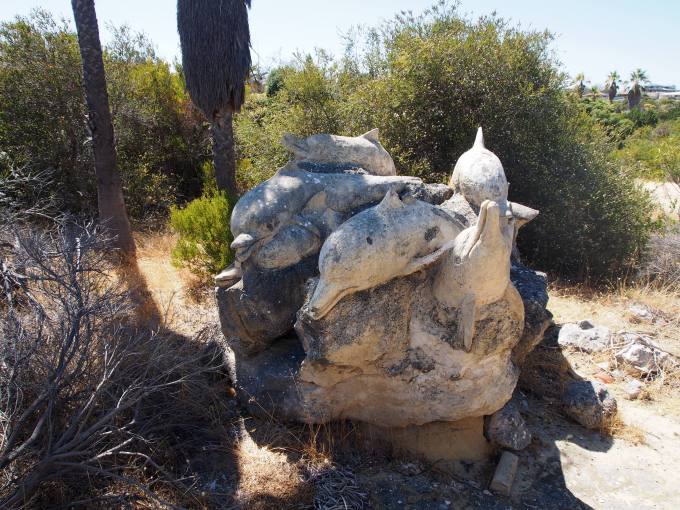
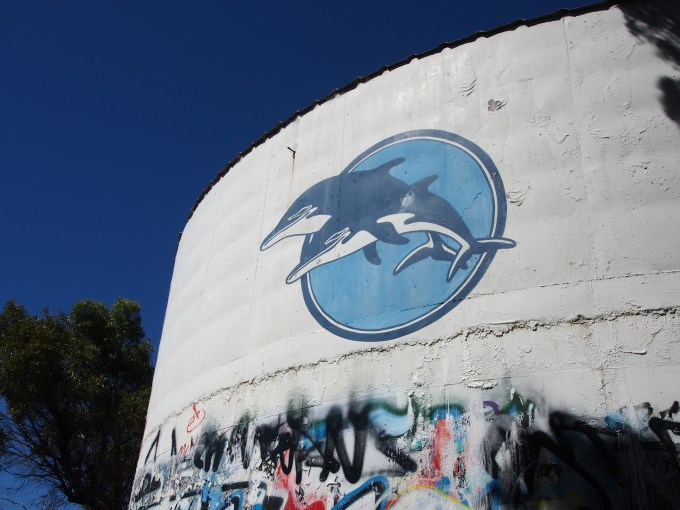
Lizards and snakes roam where dolphins once wowed the crowds, making a home amongst the sea breeze battered sculptures left behind on Tokyu’s departure. Water tanks serve as canvas for local graffiti artists, and the abandoned mattress to land area ratio is surprisingly high.

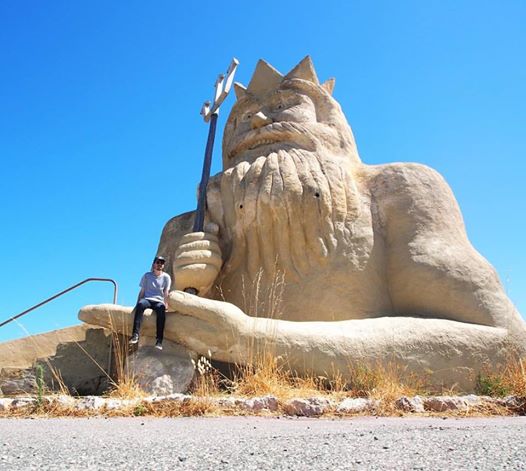
All this sits beneath the watchful eye of a trident wielding, monolithic structure of King Neptune – the park’s semi-tacky pièce de résistance which grimaces in the general direction of the Indian Ocean as a permanent reminder of everything Bond-era WA stood for.

But the Atlantis legacy stretches a little further than the teenager/backpacker/serpent breeding ground the site has become in 2017. Atlantis was once a dolphin breeding ground, and someone had to look after the dolphins.

rolf-2
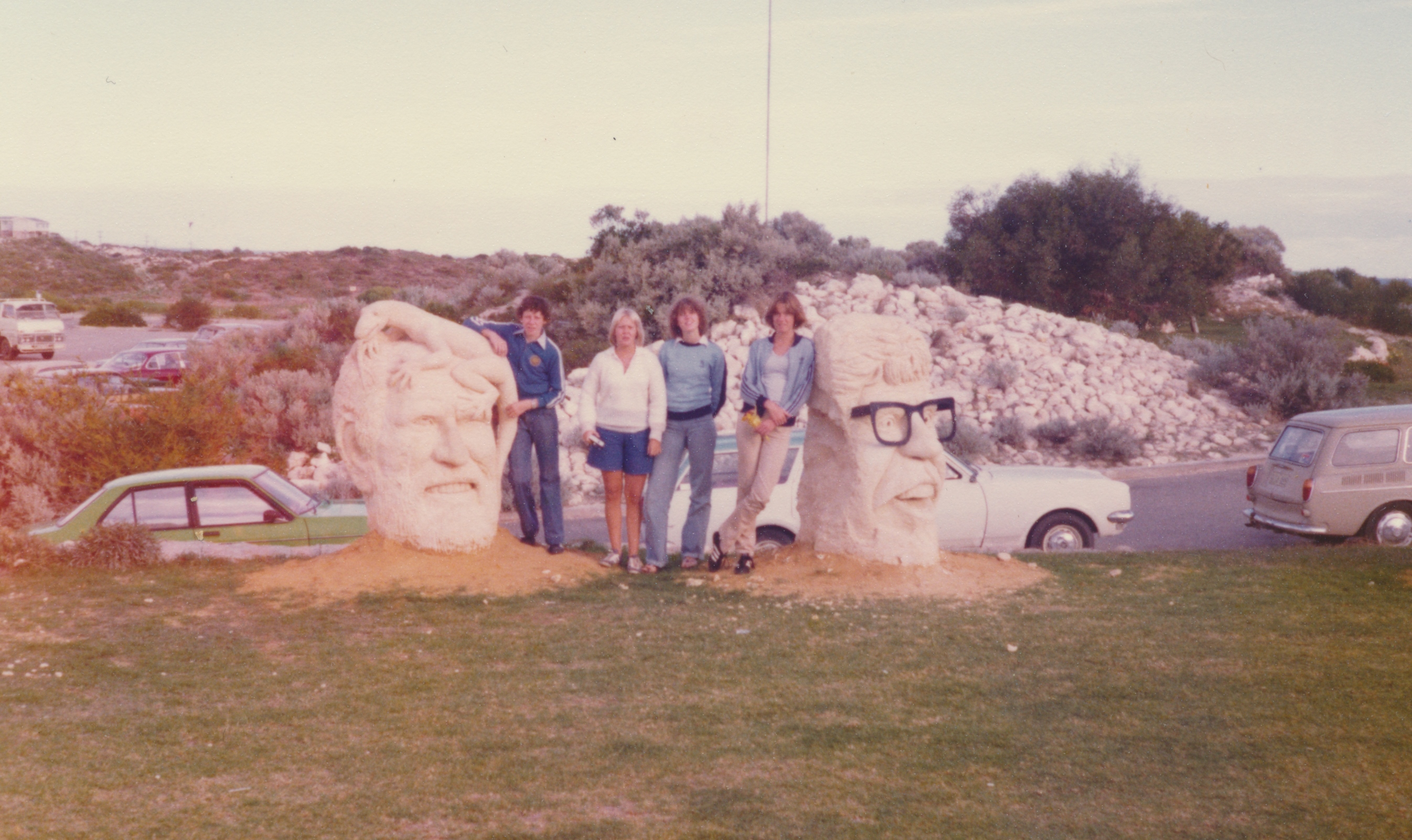
Rolf Harris was among the celebrities immortalised in limestone at Atlantis.

neppy
Obligatory. 

Atlantis’ Antarctic link

Ok so breeding ground is a bit of a stretch, but dolphins were the star of the show at Atlantis and there were three calves born in the park in the late 80s.

Seven dolphins – Rajah, Nero, Frodo, Rani, Mila, Lulu and Karleen – made up the park’s initial intake and became something of local celebrities.

The dolphins were caught in the nearby ocean by a team of park staff, who would gain the their trust with food and play, before taking a blood sample to test for genetic defects and taking the strongest, healthiest dolphins into captivity.

slwa-history-of-6wf0007
Commercialism and dolphins – hand in hand. Credit: SLWA

Similar means were used to take captive the park’s other mammals – sea lions, seals, penguins and turtles among them. But the dolphins were the stars. Trained to take part in themed shows and getting to know park staff, they became the motif of everything Atlantis stood for.

In the early days the animals were cared for by scruffy-haired Murdoch University science graduate Nick Gales – straight out of school and with little world experience behind him.

For Gales, Atlantis was a springboard to a bigger, better and somewhat ethically conflicting career path. Now a doctor and marine mammal advocate, he serves as the Director of Australia’s Antarctic Division as well as Australia’s Commissioner to the International Whaling Commission. Gales was a Tasmanian Australian of the Year Nominee in 2017 and until recently served as the president of the Society of Marine Mammalogy.

It’s a far cry from work at a water park.

Gales worked as the park vet for its notably successful first four years, before leaving to take up a dream job with the Antarctic Division. However, fate intervened and he ended up back at the sexy Seaworld equivalent in the mid-80s.

“I was really keen to get into applied marine mammal research, and decided I had to add to my vet career with a PhD so I could properly pursue a research career,” he said on the phone from Tasmania.

“I was effectively wooed by the Atlantis Marine Park to come back. It had quite a few problems during the years I’d been away, and they said ‘look, come back and run the veterinary side and the management of the animals and we’ll support you through your PhD.

“It was an offer too good to refuse, really.”

OLYMPUS DIGITAL CAMERA
Atlantis was left behind in the late 80s.

It was in Gales’ second stint at Atlantis that Tokyu Corporation decided the park was no longer economically viable. Rani, Mila and Karleen gave birth within months of each other in 1989, and bigger tanks were required to satisfy the needs of an increasingly environmentally conscious regulatory system.

Gales was commissioned by the state government to run the world-first release program for the Atlantis animals following their decade in captivity. Three of the dolphins failed to adapt to ocean life and wound up at Underwater World, with the remainder set free to a life in the ocean.

It was essentially the last involvement of anyone in the official Atlantis narrative.

The ethics question is one that recurs as we talk over the memories of Atlantis – Gales remembers his experience fondly and is grateful to Tokyu for their financial and professional support of his development. But it wasn’t all smooth sailing in terms of moral conflict at the time, or even in retrospect.

“If you were to propose a modern day Atlantis now it would be massively controversial,” he said.

“It was controversial back then and there were people who quite passionately opposed to dolphins in particular, but also sea lions and other animals being held in captivity. I understand that, and I have to say I probably hold a lot of those views now.

“There was a healthy tension.”

dolphin-2
Education was an upside for Dr Gales.

The show business side of things – commercialising wild animals for entertainment and profit – never sat particularly well. But the graduate turned doctor turned Antarctica boss took a lot of motivation from the merit he saw in the educational side of Atlantis.

“I think the issues, especially then, of using the animals as involuntary ambassadors for their species and driving conservation issues was a very powerful tool, albeit that beyond my control and taste some of the shows were very glitzy and showbiz,” he said.

“That’s not me, however we still did a lot of that base outreach explaining why dolphins are important and why people should care about marine life. I did my PhD on Australian sea lions in the end, and having them there and using them as a way of letting people know how rare they are was very powerful.

“I think that was a strong part of some comfort I had in justifying it. The other part was the enormous lengths we went to to provide leading edge care for the time.”

So is there room for an Atlantis Marine Park in 2017?

“Times have changed a lot,” Dr Gales said.

“Now there are many more effective ways of getting those conservation messages out, and for people to directly interact with wild animals.”

He hasn’t been back to Two Rocks in many years, but Gales still remembers well the place it was and the place it’s come to be.

“My wife and I built our first house up there, so it would be great fun to drive up and look at where the house is and how its developed or changed, or not, over all those intervening years,” he said.

OLYMPUS DIGITAL CAMERA
Graffiti on the side of a water tank at the site of the derelict Atlantis Marine Park tells a bigger story. 

“I occasionally see photos taken of the place – the ‘once was Atlantis’ site. It looks a bit sad in a lot of ways.”

ENDS.

Photos of Atlantis Marine Park by Colin McGinn; Photos of Atlantis site in 2017 by Jack McGinn. 

Ceremonial swords and curried egg – a Hutt River story

Graeme Ernest Casley is many things – a tour guide, a handyman, a teacher – but never did the newest sovereign leader in Australia expect to stand where he does today.

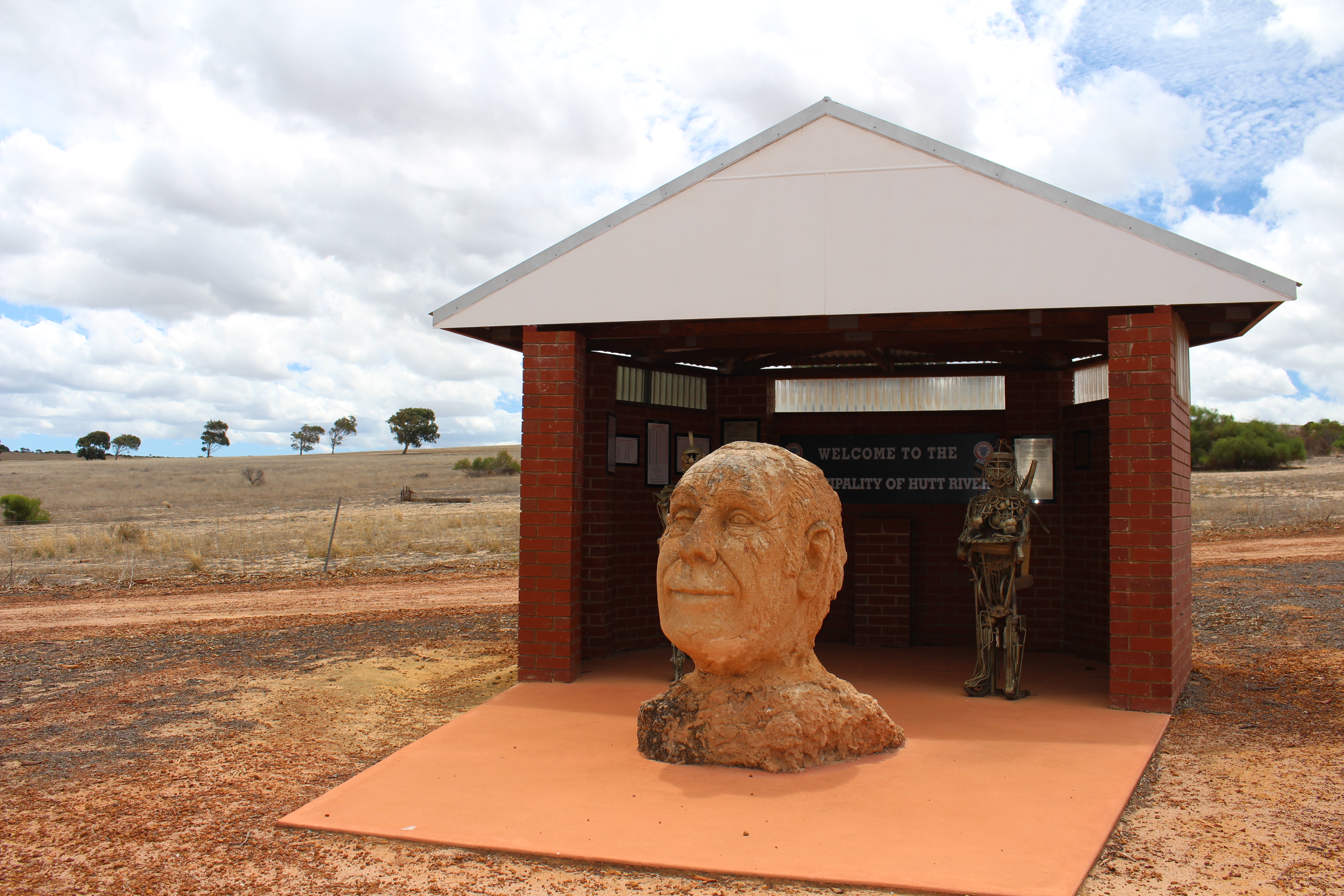
Graeme, or Prince Graeme, in keeping with his official title, is the newly crowned sovereign of the Principality of Hutt River – a 70 square kilometre patch of farming land some 500km north of Perth which claims to have seceded from the Australian mainland in 1970 in protest of wheat quotas.

Despite never having received recognition from Australia or most other governments of its right to sovereignty, Prince Graeme’s father Prince Leonard has led Australia’s oldest micronation for 46 years.

It was Leonard who manouvered clauses of international law to protect what he saw as a blatant attempt to steal his land by the Western Australian government – and one stage going to the point of declaring war on the mainland. It was Leonard too who after a few years leading the Principality morphed the public image of he and his family. In the beginning they were farmers fighting for their right to land. After a few years they became royals, dishing out knighthoods and military honours to those deemed worthy of recognition and sporting ceremonial gowns on special occasions.

prince-leonard-congratulates-prince-graeme-on-his-inaugrat
Welcome to gown town

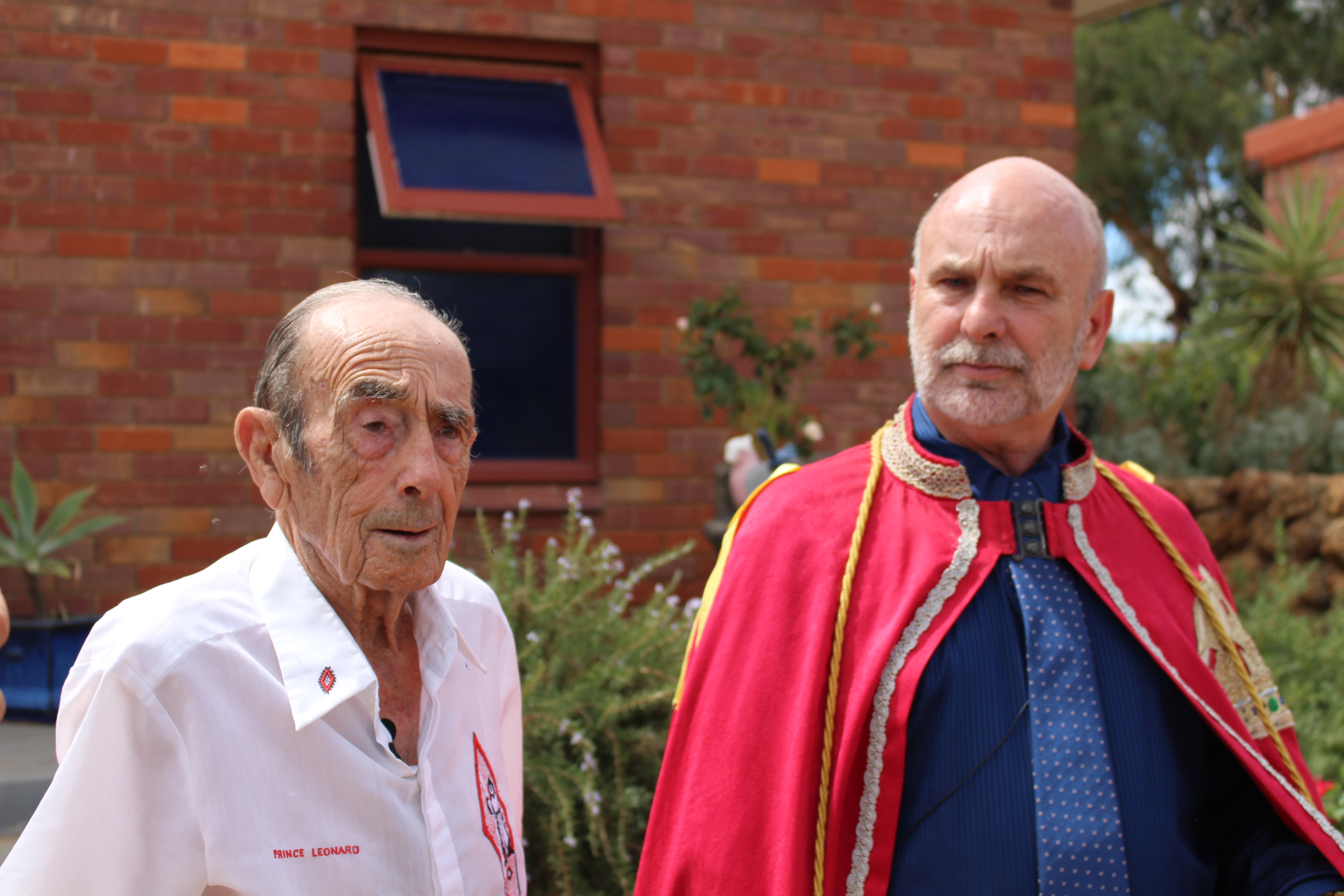
Like a real life Darryl Kerrigan, Prince Leonard’s legal battles have become something of WA folklore. But at 91 and with his health deteriorating rapidly, the founding father of Hutt River made the decision to abdicate his position and hand it over to his youngest son, 59. Today was a day for Prince Graeme – the new leader of the Principality of Hutt River.

With inaugurations a hot topic so far in 2017 I drove for more than six hours from Perth to attend Prince Graeme’s special day, to be held in Princess Shirley’s Chapel of Nain at the Principality.

A crowd of around 80 packed the chapel to witness some obscure as fuck history, and they weren’t disappointed. The chapel itself was a heavily religious affair, dominated by paintings of Jesus and crucifixes and blue glass windows a friendly local told me were imported from Italy some years ago. It’s said when closed the glass cools the chapel to the point where the blistering heat outside is barely noticeable. Today the windows were open. The carpet, we were told during the proceedings, is a remnant taken from Buckingham Palace some years ago following a fire. The carpet is red.

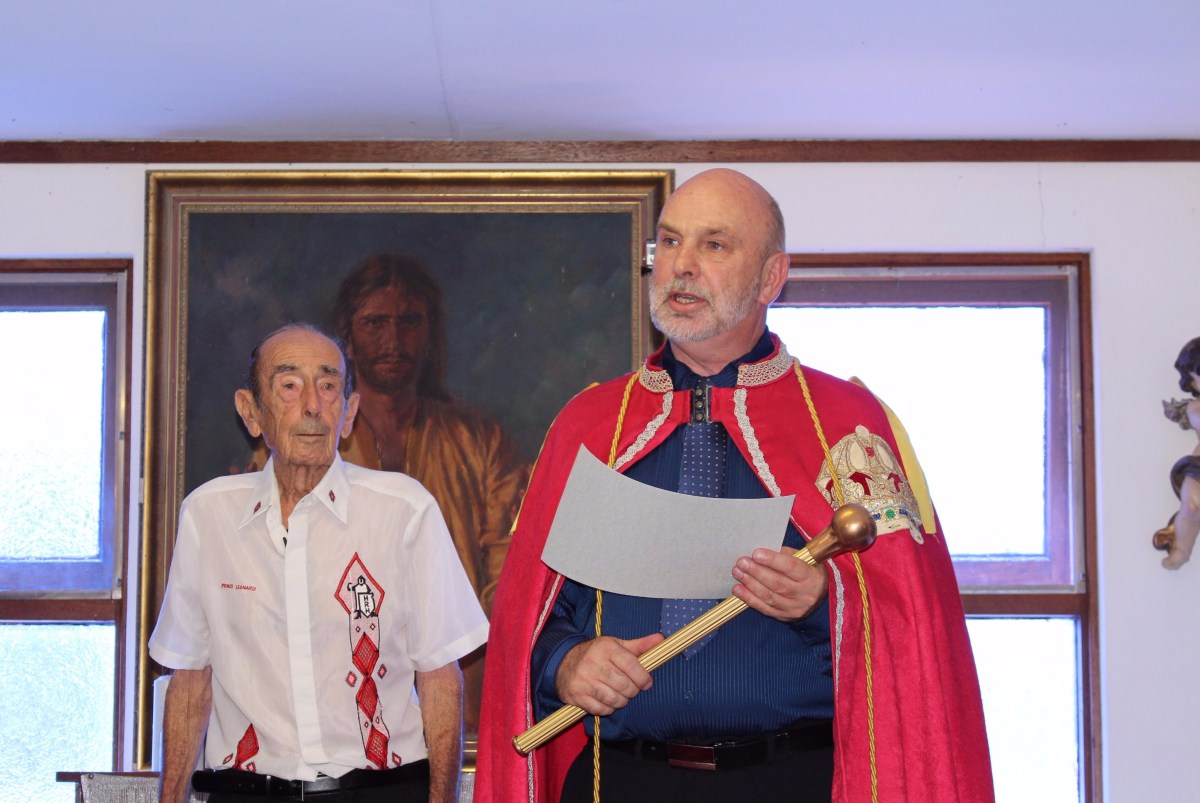
Following the Hutt River national anthem, Keith Kerwin’s It’s a Hard Land, and some final recognitions from Prince Leonard the transition is formalised. Prince Leonard’s famous red robe is handed over to Prince Graeme, whose less famous green robe is removed.

The new leader is handed a ceremonial sword and baton, the significance of which is unclear, before posing for photos and inviting guests down to the Hutt River tea room for curried egg sandwiches and cake.

In between, Prince Graeme tells local media of his plans to expand the population of Hutt River. At present it stands at around 30 but feasibility studies suggest it can sustain somewhere in the order of 20,000. He talks legalities – the ATO is currently chasing $2.6 million from the Principality, a request they unsurprisingly intend to fight. Mention of his late mother, Princess Shirley, invokes an emotional pause – it’s clear that the occasion is deeply personal to the Casley family.

a-moment-of-contemplation-from-prince-graeme
The princes address the media.

Before long the press conference was over, formalities were finalised and the gowns removed. As we walked toward the tea room I asked Prince Graeme if he had a moment to sit down for a chat. He obliged, and the two of us ended up back in the chapel. Prince Graeme was thoughtful and candid.

DIPLODOPEST: You’re the first generation to have grown up in Hutt River. What was it like being a teenager and growing up as part of the Principality?

Prince Graeme: We had a house in Perth where we did our schooling, and that was very much normal, run of the mill schooling. But on holidays we’d come back to the Principality and enjoy the farm life of freedom and go venturing and help out with sheep work when you needed to. The unique part for me was as a 13 or 14 year old having media interviewing mum and dad in the living room, from Australia’s Women’s Weekly or BBC. I didn’t realise it at the time but when I’ve looked back my world view grew very quickly just by listening to people and seeing where they come from and what’s happening in other parts of the world. Perth being a very isolated capital, it would have taken many more years to form that big of a world view.

Did it affect your friendships and relationships with people?

The close friends became closer and I still treasure them. People one or two steps removed didn’t seem to understand or didn’t read the history, or hadn’t met mum and dad to know what it was all about. You learn to just be tolerant of them and brush it off. They don’t quite understand where we’re coming from.

Coming home as a teenager and being told your property was going to secede and form its own sovereign identity must have been quite a shock. Was it something you immediately embraced?

It was a shock, but because dad is such a studious person and was doing so many hours in his study on gravity and planetary interactions, we knew he had purpose and a reason why. When he said the farm was at risk from wheat quotas and we needed to secede to protect the property it was accepted that that was the only alternative. He would have thought of other choices if he could. It was very left of centre but it was the only option and I trusted and believed in dad’s understanding of what he was doing.

Has it always been your goal to one day lead the Principality?

Not at all. Since coming back here three years ago and doing a lot of the behind the scenes work, I realised I wanted to do my best to keep Hutt River going. We knew the inevitable would happen with dad and there’d be some sort of change. My natural instinct is to step back, but after these three years seeing dad’s health deteriorate and being given such tutorage it was a natural progression to step forward.

You haven’t always been in Hutt River? What were you doing before you came back?

I was a primary school teacher with the Western Australian Education Department. I travelled the state in that role, but when mum passed away three and a half years ago I retired out of there and came here full time.

Hutt River has a very complex relationship with the WA government – was there any moral conflict for you as an employee of the state government during your time as a school teacher?

It did in the beginning, but I learned to fly under the radar. I paid my taxes on money earned and I was loyal and did my duty for the department, and I also stepped forward and did seminars and workshops for teachers. I felt justified that I wasn’t sneaky or underhanded, I was up front and I paid my expenses and dues as required.

Do you consider yourself an outsider when you venture outside the Principality and into Australia?

Absolutely. Every time I drive out I think I’m going on a journey. Even though it’s a short drive and the roads are the same as our roads it does feel like you’ve entered a slightly different country. I have friends and family in Perth, when you actually touch base face to face with them it’s a lovely feeling of ‘gosh I’ve come that distance’. It is 500km to Perth so that physical travel certainly makes you feel like you’ve come from somewhere else to meet family or do errands.

People outside of Hutt River may consider this to be a bit quirky, or kind of a novelty. Can you see that side of it as well?

Of course. Growing up and living and having had friends have a bit of a dig you get an idea of it. If I was outside the family looking in, it’s certainly a very different and left of centre answer to a problem. I guess that’s the beauty of being right in the middle – you have that understanding of why things happen. A big part of my day is to meet and greet the many visitors that come, and they come with interest and curiosity but some have a bit of a banter about them, where they want to sort of say things like ‘it’s just a tax jaunt’ or ‘crazy, eccentric farmers’ or something. You accept that, you have to be tolerant of people. They don’t fully understand, or want to fully understand. We’ve always been open and speak from our heart.

What’s going to be the hardest part of following in Prince Leonard’s footsteps?

They are such big shoes to fill. He has such a depth of knowledge of constitutional law, he’s lived all those issues. When a new question comes forward or a new event he’s got all that history to relate it to and he can deliver on that. Like all of us when you come to a new job or new situation or you step up, you hope you can bring your skills and character to the things that have been done in the past and make them a bit better. Whilst I don’t have the depth of knowledge or law, I think I’ve got some other skills and dad has made that knowledge available to me so I can find the answers.

Are the robes a day-to-day thing?

They’re ceremonial. Purely ceremonial.

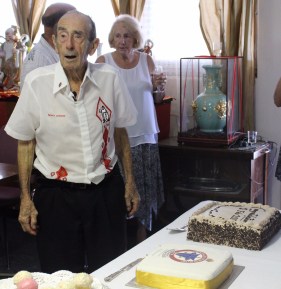
We headed to the tea room, where the mood turned from significant royal occasion to how I imagine a bowls club gala day would feel. On the cutting the cake a frail Prince Leonard, who is battling with emphysema, declared his thanks to a US-based medical machinery company which had donated a breathing apparatus to his cause. Everyone applauded. He and Graeme cut the cakes and everyone applauded again. It was a nice moment befitting of a very odd occasion.

img_5415
Prince Leonard with his cakes

On leaving I noticed a crowd of people around the door of the gift shop/post office. An important building where passports are stamped, visas issued and trinkets sold, the door had been locked from the inside and it was none other than Prince Graeme on all fours with a screwdriver, trying in earnest to wedge open the barrier between some international tourists and the many ceremonial stamps on offer at the Principality.

The door was eventually pried open and Prince Graeme was behind the counter, taking dollars (the Hutt River dollar is tied one-for-one with its Australian equivalent) and offering service with a smile.

All in a day’s work for the new leader of the Principality of Hutt River, I guess.

prince-leonard-sculpture

Bound

OLYMPUS DIGITAL CAMERA

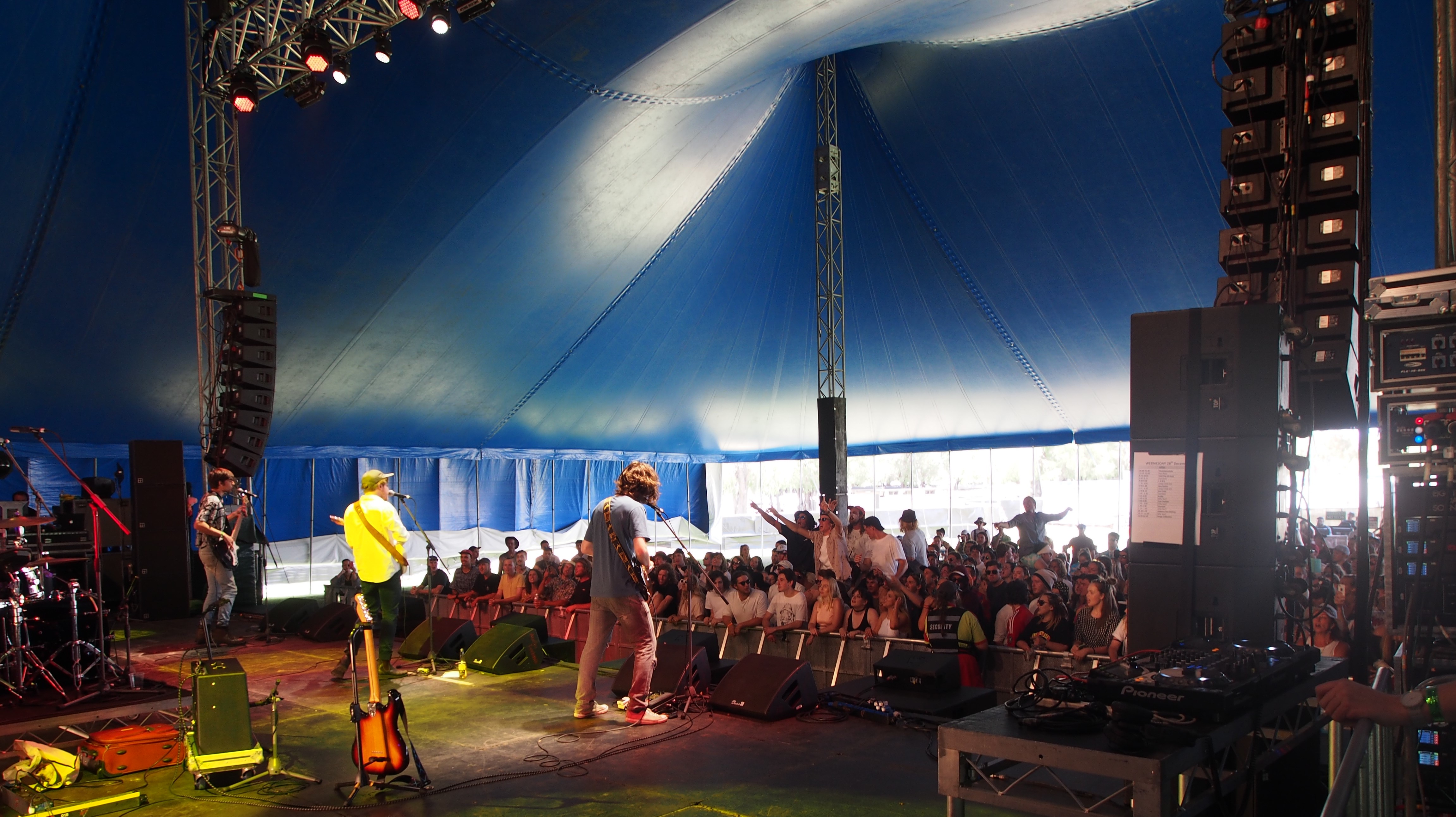
High school classmates, Ben Arnold and I first attended the Southbound Music & Camping Festival in 2011 as passengers in mum’s 2005 Lancer. At that point our main goals were to find a well-placed camping spot (successful), set up our tent properly (not so successful), and palm off the half a watermelon mum so lovingly packed on our behalf without telling us (I ate it later with a teaspoon).

Southbound back then felt very much about image – the fact I was even there felt like it said something about the sort of person I was, and the sort of music I listened to. The reality was I’d barely heard any of the bands who played, and with Ben a bit of a music nerd we were maybe the least cool people in a literal field of cool guys and girls.

Older and wiser, we made the trip down the highway to Busselton again in 2016 with an entirely different perspective on what Southbound had the potential to be.

For Ben, now frontman of WAM Award winning indie-rock four-piece Verge Collection, playing the festival represented the culmination of years’ of hard work and gigs played alongside everyone from Mercury Award winners to slam poets at the local Hellenic club.

I’d drifted in and out over the years. We did Japan in 2013, but I moved to Geraldton in 2014 and had all the jobs since. Where I could I went to see the band play, but this was by far the biggest moment I could remember being present for.

With artist passes in tow, Verge Collection playing Southbound was the resolution of a story which started in the back of a Mitsubishi almost six years earlier – I thought our cred might be enhanced now one of us had actually achieved something (and with the other tagging along for the ride).

I learned some stuff:

  • Musicians are people: The best thing that happened to me at Southbound 2011 was when I bumped into Yacht Club DJs and had a photo with them. We didn’t really talk, I didn’t know what to say, but I walked away a lasting memento of a meeting I felt I really wanted to remember for some reason.Granted in 2016 I had a photo with Wil Wagner. He was good enough to give me the time of day to chat and introduce me to some of the other people he knew there. Like a normal person would. Because he is a normal person. Because it turns out that’s what musicians generally are.The experience could only be further amplified for Ben, who is also a real live person but also a musician. It’s a far cry from 2011, when as 19-year-olds there was no greater thrill than meeting a musician you idolised. Still trying to work out if this change is a good or bad thing, or just a thing that happened.
  • Festivals are stupid expensive: The tickets, the drinks, the food, the merch. As a 19-year-old I think I bought all of it. Not really sure how. I can’t speak for Ben but it was probably with mum’s money – it wasn’t enough for her to drive us there and buy us a watermelon, I had to do that too. Sorry mum, if you’re reading.
  • Early sets matter: In 2011 Ben and I wandered relatively aimlessly for the first few hours of the festival, without much to see. In 2016, Verge Collection was literally the second act to perform.I thought they killed it, by the way. They pulled a huge crowd for their set time, and they absolutely nailed the set before closing with a yob rock classic. As a friend it was really cool to see people engaging to the point of climbing on other peoples’ shoulders.2011 festival us would have missed that set all together.
  • People climb on other peoples’ shoulders: I never understood why they actually do that. Personal space isn’t something people seem to value at music festivals, but I noticed it more in 2016 than in 2011. I’m probably getting old. One person was convinced I was a police officer and kept grabbing my jacket. If I was a cop, why would you grab my jacket? We spent a lot of time away from the crowd because of what the crowd was.

But most of all, I learned that thing haven’t really changed that much at all. Ben got to play this one, and I knew a few more of the bands then I did before, but really when it came down to it the only real difference was the casual acknowledgement and acceptance that we probably weren’t going to fit in. Before the day had even ended we were back on the road towards Perth, and by the time we reached Bunbury the chapter had drawn to a close.

At least we didn’t have to hitch a ride home this time.

The kick-on

If the New York I experienced in the day following Donald Trump’s remarkable 2016 election win was a city quietly sobbing, by sunset said tears had turned to a uniform roar of anguish.

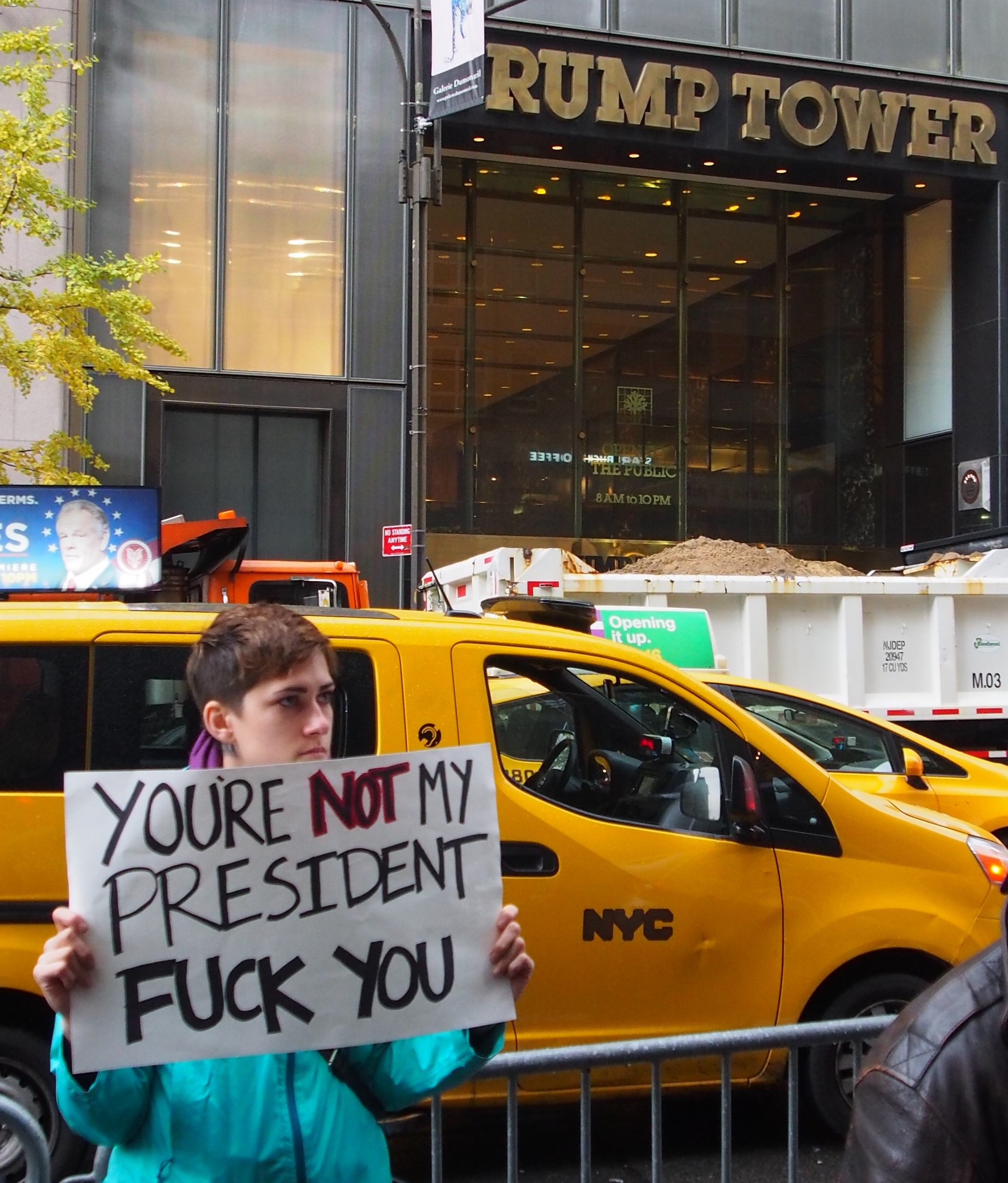
The protest – international news, no less – started at Union Square at 6pm and navigated some 40 blocks toward Trump Tower, picking up people along the way as it closed the city streets and took on a life of its own.

The chants reverberated through the night sky – ‘F**k Trump, Pence, Christie, ‘the wall’; Black, Latino, Muslim, gay lives matter; Pussy grabs back’ – a blend of the political and social and all expressing extreme distaste with Trump’s conduct and character.

OLYMPUS DIGITAL CAMERAThe closer it got to the tower the more uniform the message. “We reject the president elect,” they shouted loud enough that surely, even from the top of Trump Tower, their presence would have been felt.

Little may come of these protests – not just in New York tonight but across the country – but as a fly-on-the-wall it felt like a moment in history, as though a collective had thrown its arms up in exhaustion at the prospect of its coming years.

I said in my earlier post that I didn’t feel things were different in the street during the day and I stand by that remark. While the people I saw on the subway and outside the tower by day were merely going about their day-to-day lives this was a congregation of the like-minded people whose displeasure at the election result was bolstered by energy of the pack mentality.

OLYMPUS DIGITAL CAMERAThey were primarily but not all ‘millennials’ (for whatever that term has come to mean – I’m talking people in their 20s and 30s). Age aside, the displeasure with target of the evening’s disdain seemingly transcended gender, race and sexuality – it was a united New York, but one united against the man self-tasked with making the nation great again.
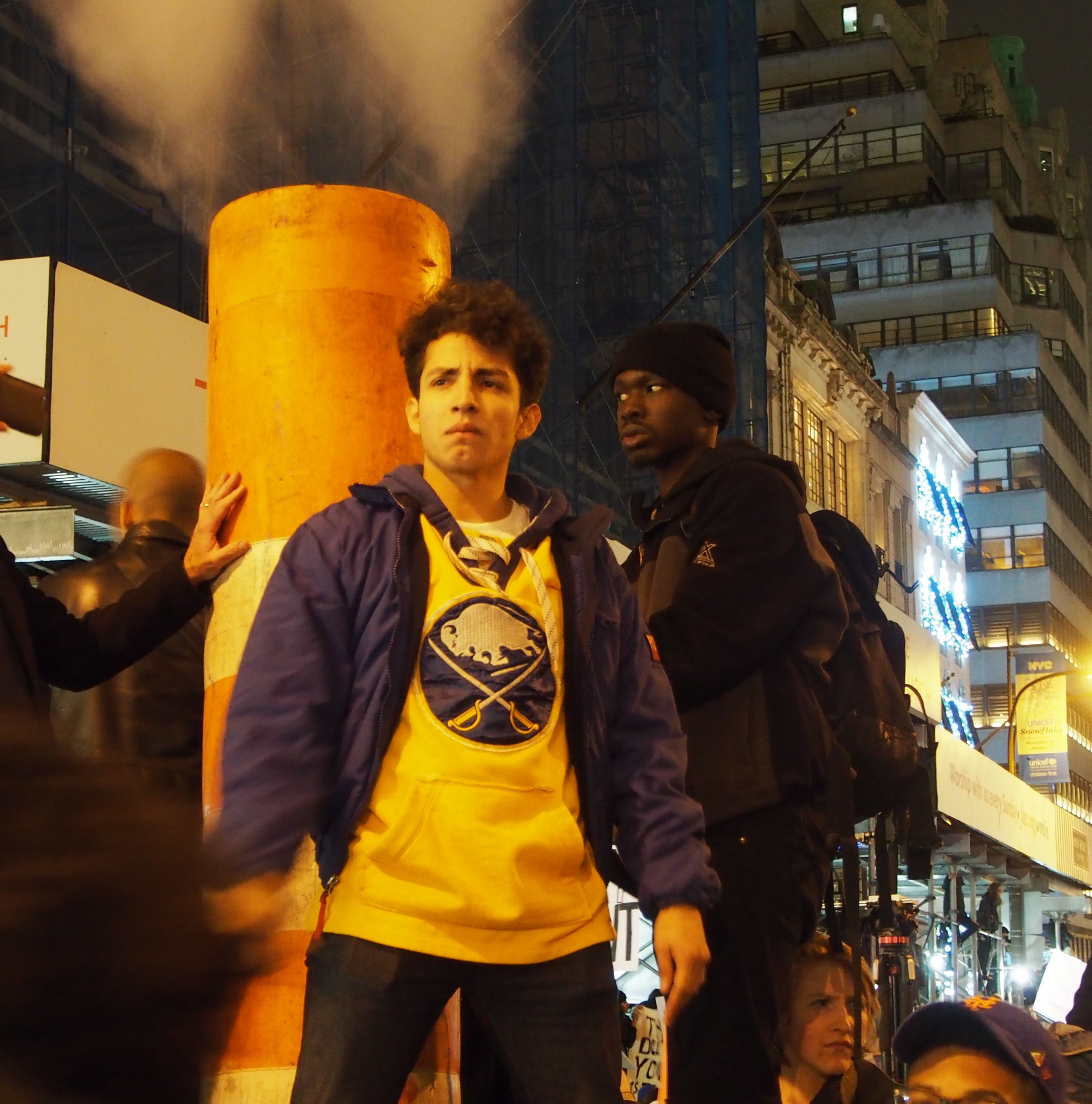
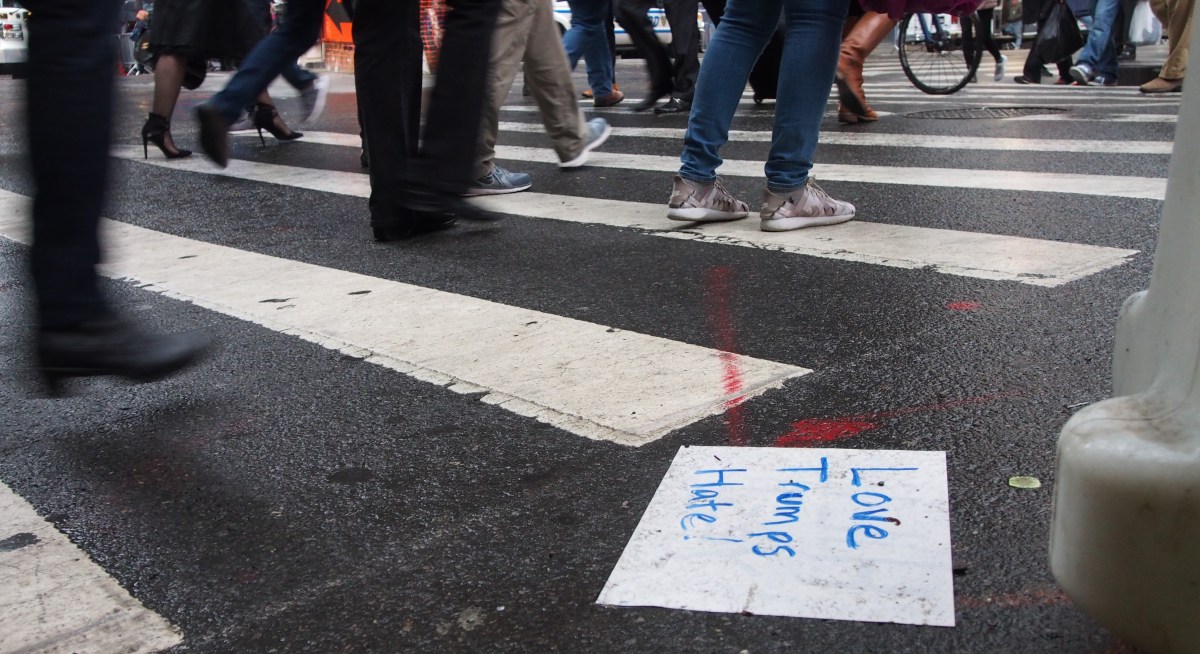
I don’t personally want to delve into the politics of the situation – as a visitor that’s not really my place.

The reality remains that the United States has democratically elected Donald Trump as its 45th President.

What I can tell you is that a lot of people in New York City are disillusioned by the election of their hometown ‘hero’. From what I saw in the streets tonight I’d expect the distaste to last for some time to come.

OLYMPUS DIGITAL CAMERA

I was only there briefly but I took these pictures. The protests continue even now, and are expected to kick on through the night.

Also three posts in two days is too many but time sensitivity is important too, so provided nothing else remarkable happens (no promises) I’ll be toning it down a bit from here.

All photos by Jack McGinn. Please note that all views are opinion and guided only by personal experience as a traveller in New York City. 

The Hangover Pt. Trump

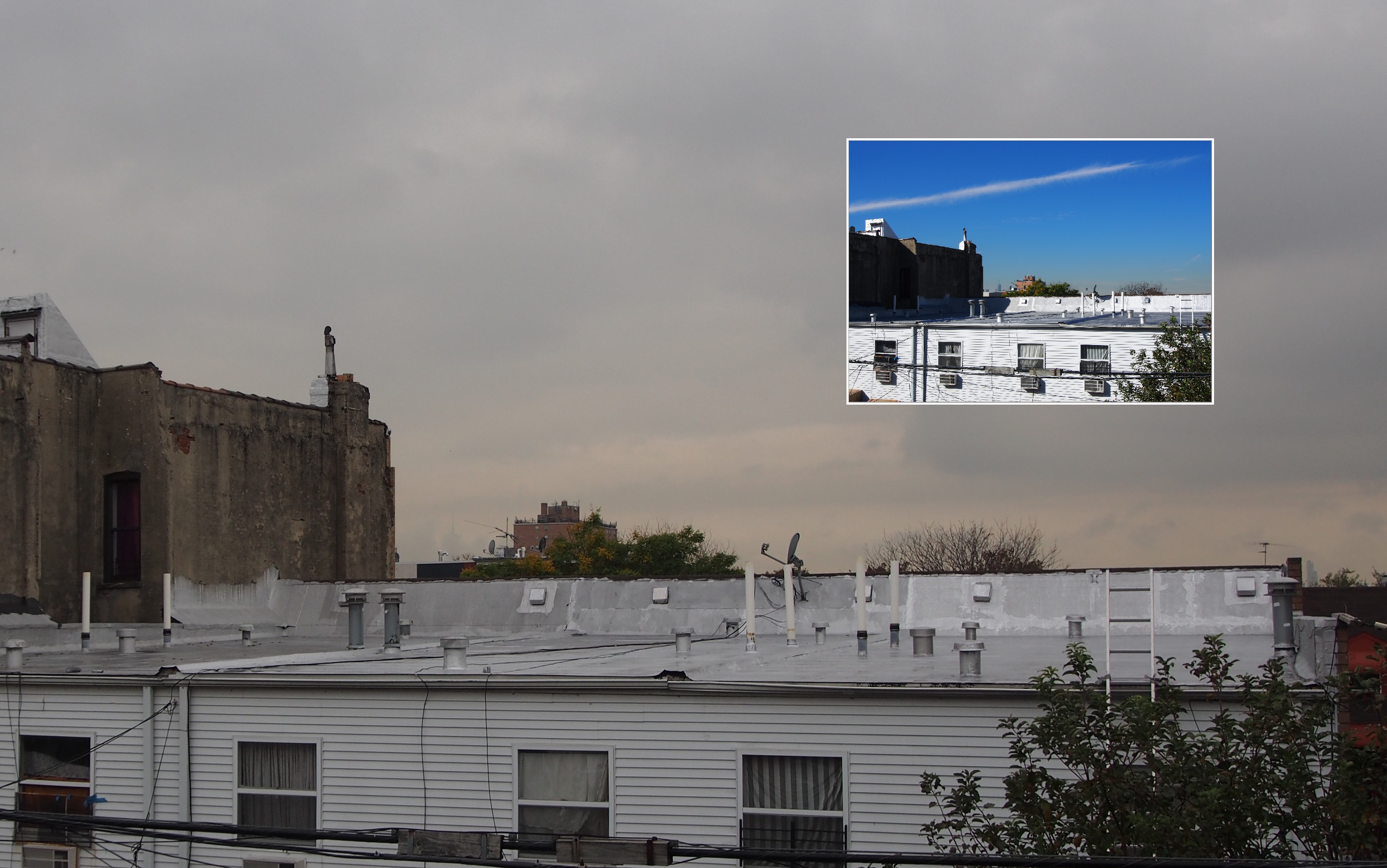
As they went about processing the shock results of last night’s election, the people of New York City woke to a blanket of thick, grey haze which absorbed the city skyline.

OLYMPUS DIGITAL CAMERA
Today vs yesterday (inset)

It’s seemed an apt shift from the blue skies of election day – where yesterday there was optimism of a Clinton victory, today there is cloudiness at the prospect of a Trump future.

For many in the US, the Trump future is the one they want. Pushing aside significant controversy, voters clearly engaged with the Republican’s rhetoric around a lost greatness, promises of a shift to greater control on borders and an anti-establishment movement. I saw a lot of people on social media ask if the people of the US learned anything from the Brexit – they clearly did, and they liked what they saw.

But for New York, a safe Democratic state, most signs suggested this was not a desired result.

I was at the Nets game in Brooklyn last night when the news started to trickle in that Clinton was in for more of a fight than earlier predicted. You could see attentions slowly turn away from the basketball as it went down.

Not even Ja Rule, who was in the crowd and they kept showing on the big screen for some reason, could bring people back to the game.

It was visible again today, in some of the eyes of those riding the subway, the quiet chatter of those looking for solace in the company of others and the occasional person verbalising their concerns to anyone willing to listen.

In the spirit of being a good journalist and a horrible tourist I did my best to seek out trouble and a story today where possible. Overwhelmingly though, it seemed remarkably similar to any other of the last few weeks.

OLYMPUS DIGITAL CAMERA
The media were out in force in NYC today.

The people

There was a lady at Myrtle-Wyckoff Station adamant that the decision to elect Trump would spark a civil war, but her views were largely ignored by a crowd which seemed more intent on quiet reflection than outward expression.

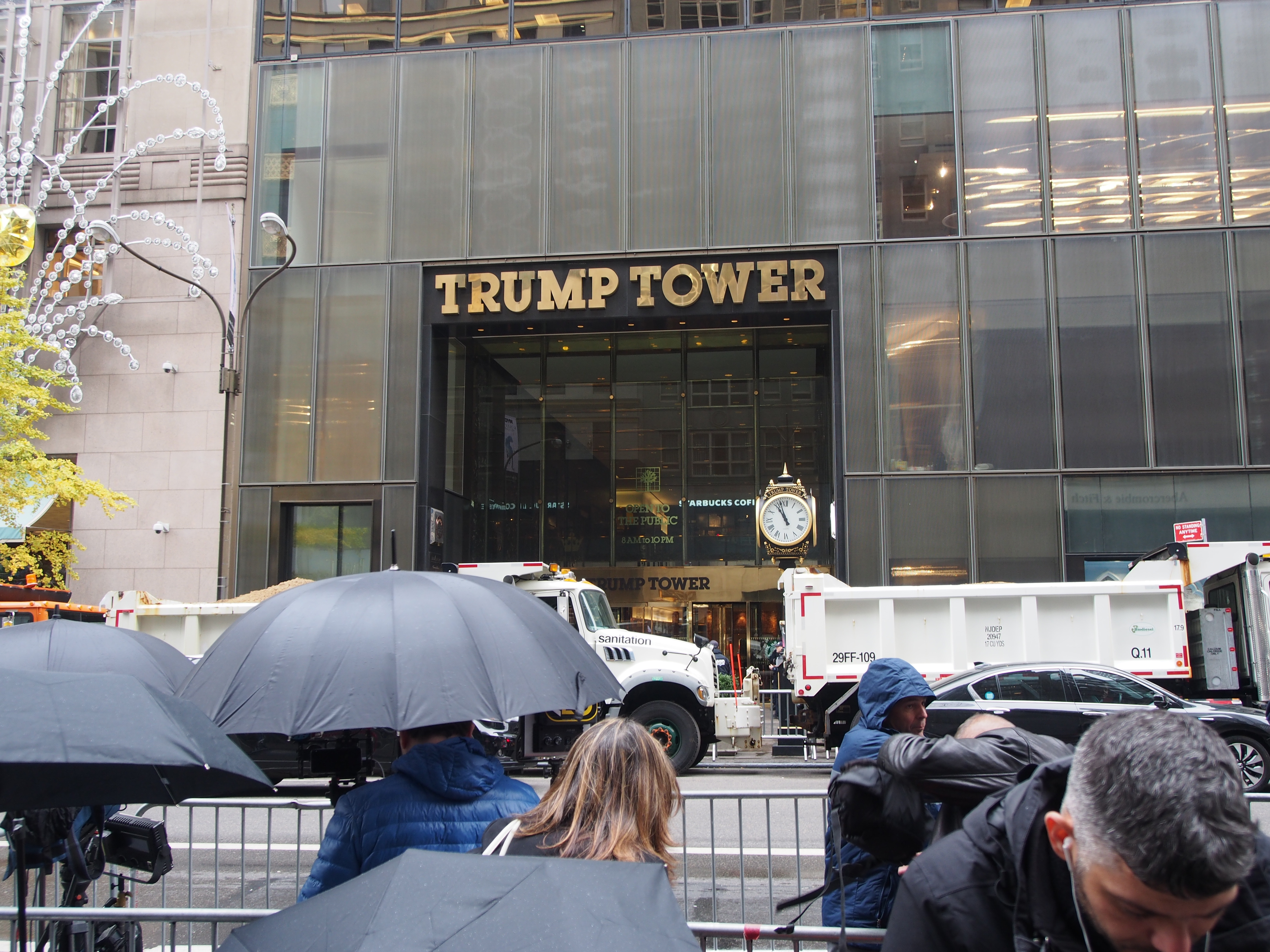
The destination was Trump Tower, where I figured there’d be someone doing something of note. Last night Lady Gaga was there in protest of the election result. Today it was surprisingly placid, though swarming with a significant police presence.

OLYMPUS DIGITAL CAMERA

A small group of younger people gathered out front in protest of Trump’s views on sexuality, abortion and gender. One tried to go to work but had to leave at her perceived injustice of the situation – “I told my boss I couldn’t just stand there and do nothing,” she said.

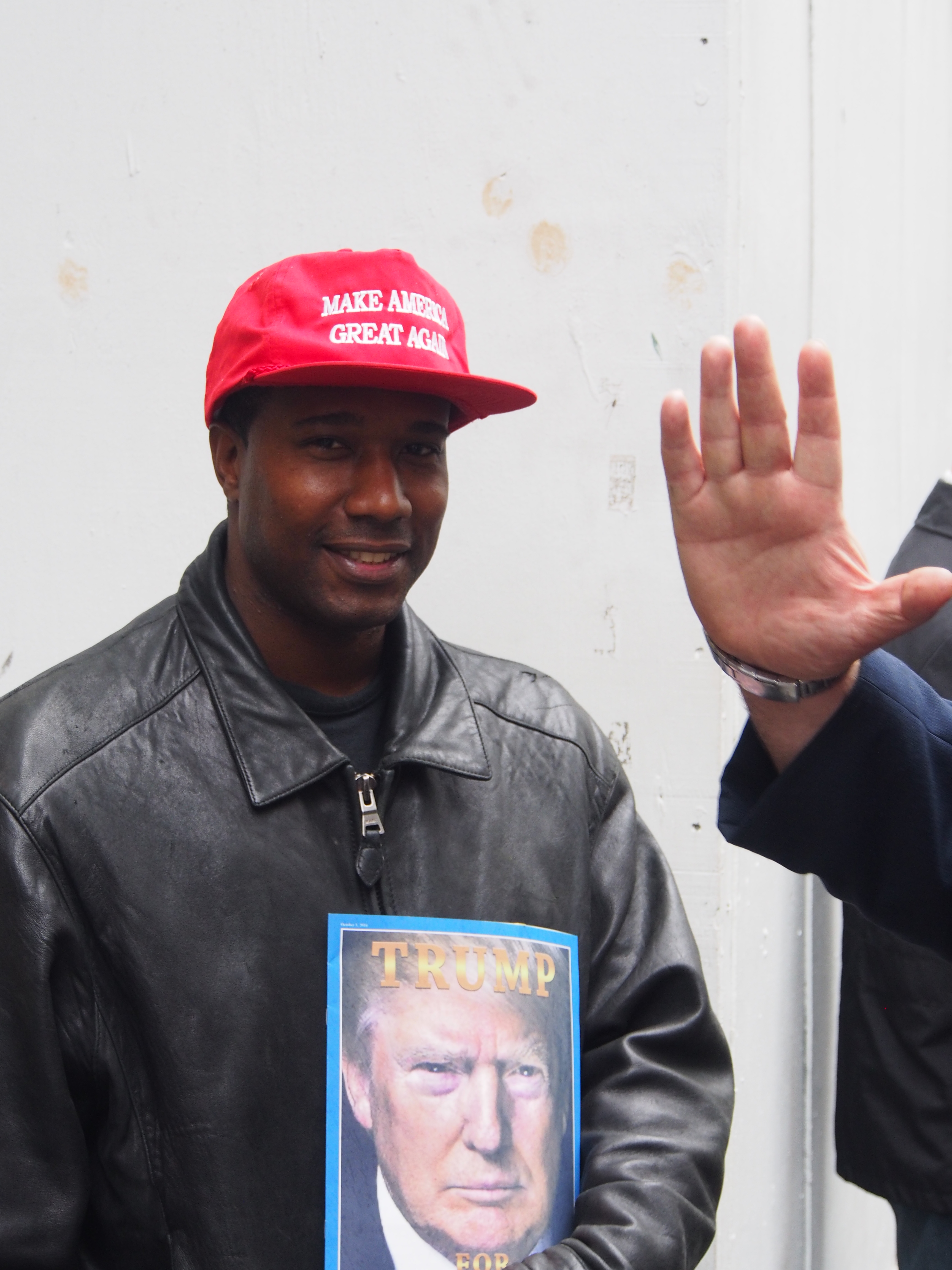
On the other side of the fence were Trump’s fans. Those who turned out seemed to be of various groups – there was Blacks for Trump, Jews for Trump and Christians for Trump – but there didn’t seem to be one united assembly of Trump fans gathered.

Regardless, the word from this side was that the nation had been saved at the hands of the election result the previous evening. The mistrust of Clinton was clear, and the desire to be removed from an establishment politician dominated discussion.

OLYMPUS DIGITAL CAMERA

OLYMPUS DIGITAL CAMERAOLYMPUS DIGITAL CAMERA

One thing I’ve loved about watching the political debate on the street is the mutual respect New Yorkers have displayed for one another. The conversation can be heated, but not once have I seen it get personal or violent despite the size of the topics at play.

The politicians

In a nation of 319 million people stretched across 3.8 million miles of land I find it astounding that the presidential candidates could spend the evening just two blocks apart, but that’s exactly what happened.

OLYMPUS DIGITAL CAMERA
The cars await Hillary and her husband Bill (I got a photo of Bill’s arm but it was blurry).

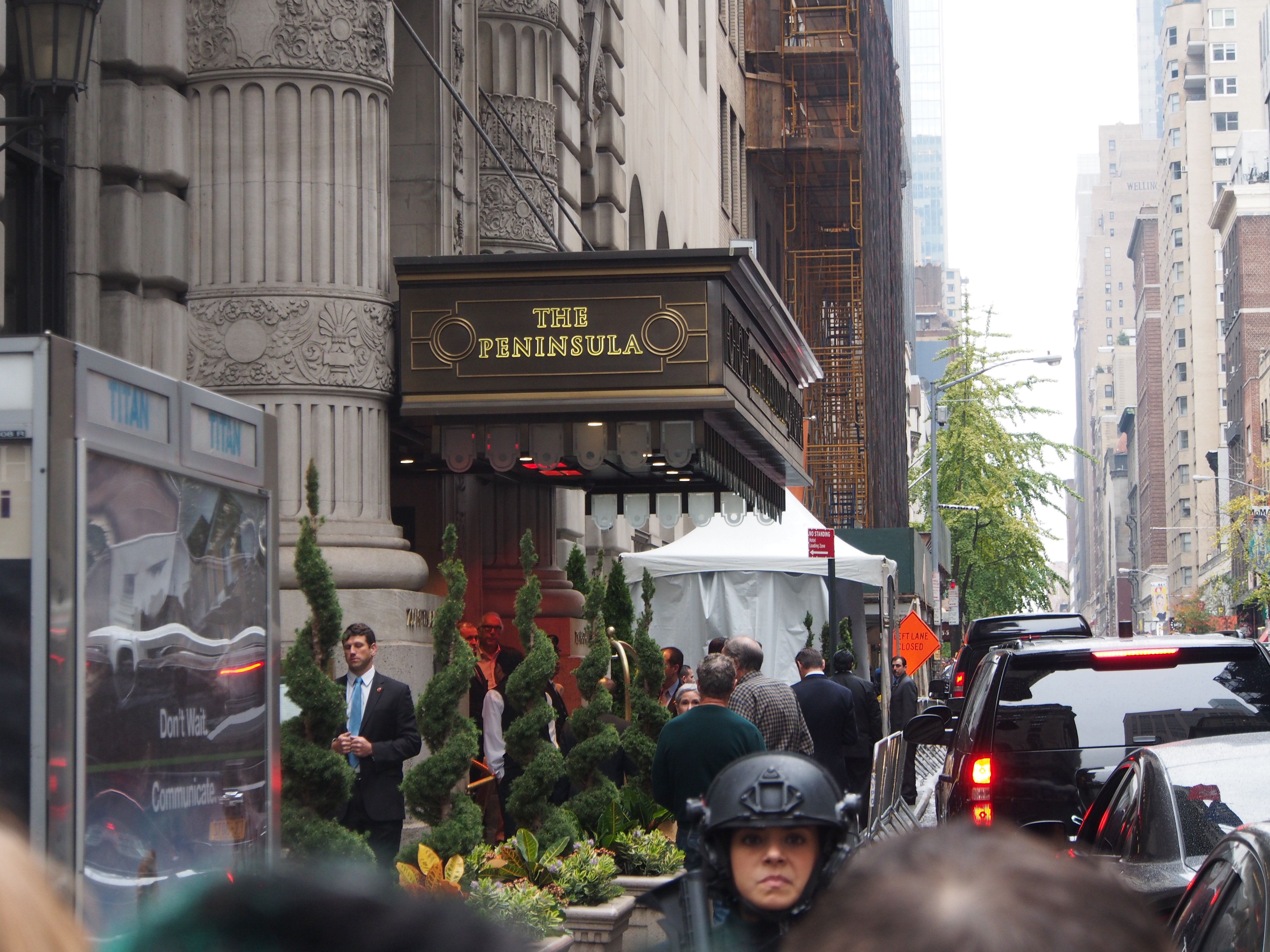
While Trump was holed up in his namesake tower on the corner of 5th Avenue and 56th Street, Clinton spent her election night literally down the road at the Peninsula. They’re on the same street.

On the way to Trump Tower I noticed a crowd, and realised we were standing at the front of the Peninsula. Surely enough, within 10 minutes Hillary and Bill emerged and jumped straight into awaiting cars surrounded by a strong police presence. All things considered the crowd was pretty adoring of the Clintons as they left, and not long after she delivered a speech to fans nearby.

There was no sighting of Trump at the tower, but a large queue of garbage trucks filled with sand formed a barricade of their own on the street in front of the building. It was an unusual sight, but I suppose this is no orthodox politician.

The lesson learned

Every vote counts the same, and at the end of the day America democratically elected Donald J. Trump as its 45th President. Say what you will about the candidate and the motivations – racial, gender, ideological – of the people making this decision, this is democracy at work and the freedom the United States prides itself on.

Will he follow through on his campaign promises? No one really knows. Once the fog clears I suppose we’ll have a better idea.

OLYMPUS DIGITAL CAMERA
Garbage trucks guard Trump Tower in New York the day following his election as US President.

All photos by Jack McGinn. Please note that all views are opinion and guided only by personal experience as a traveller in New York City. 

An Australian take on US Election Day

stranger-things
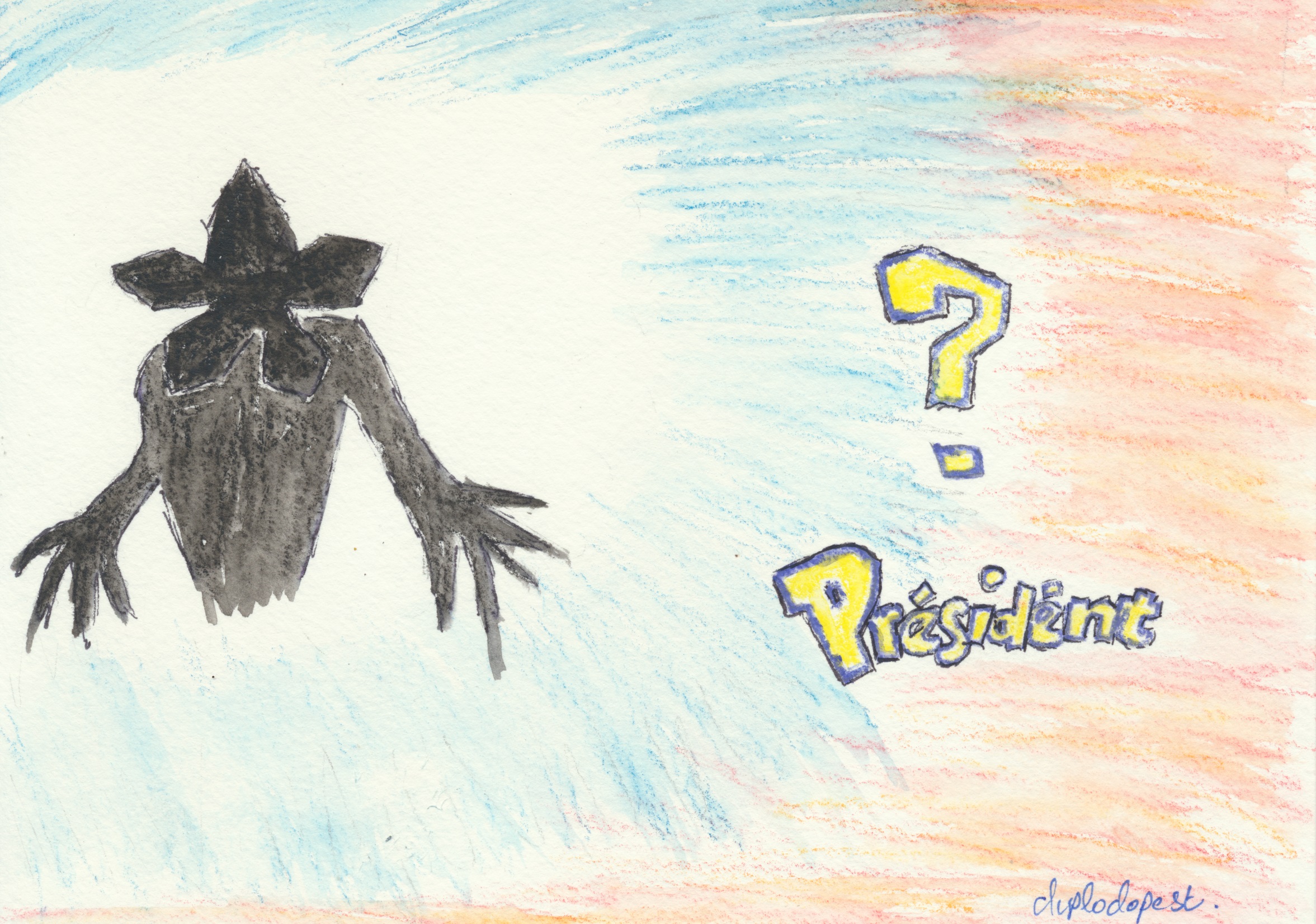
Barb scandal aside I felt the Demogorgon ran a strong campaign

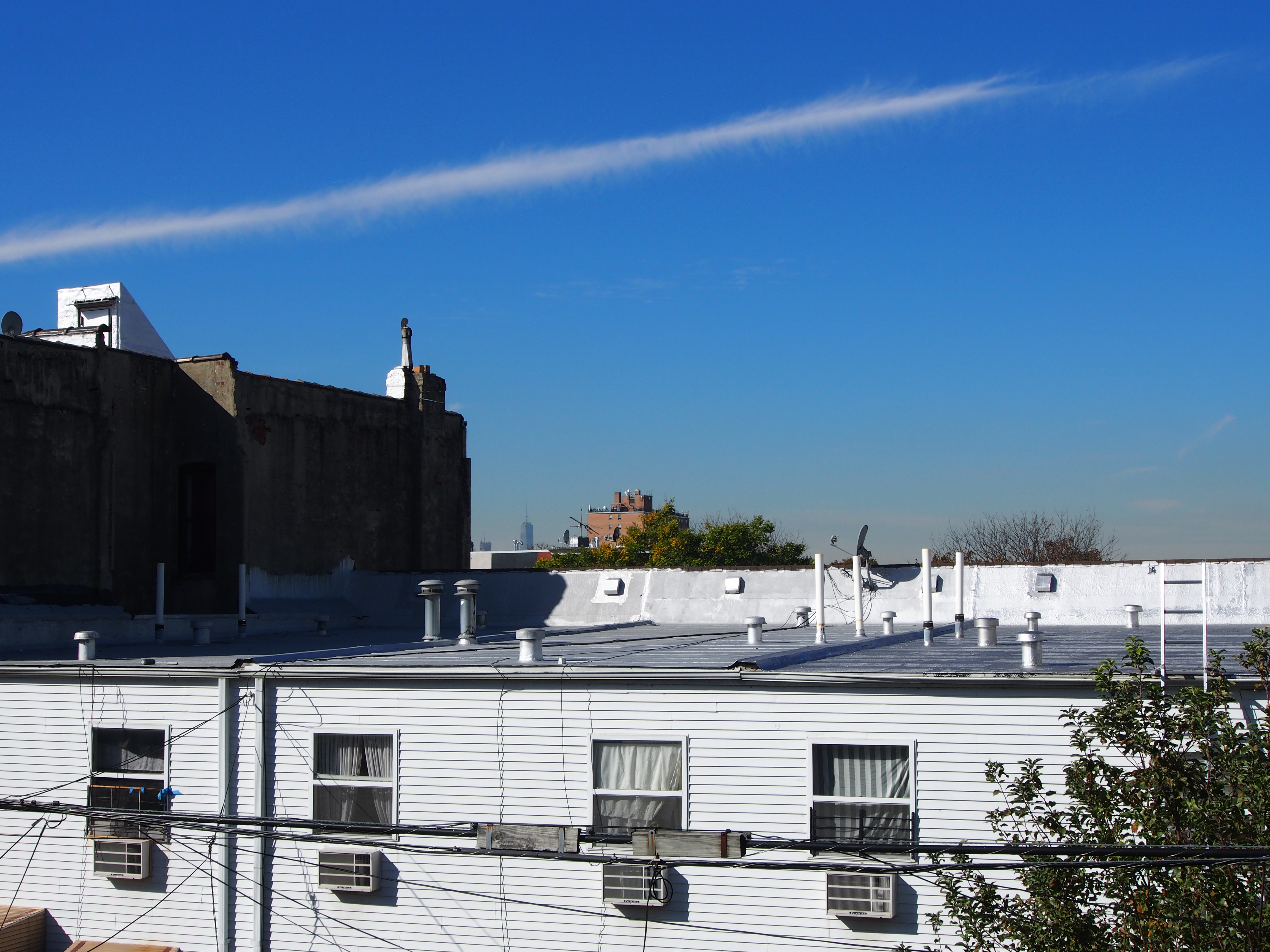
Sitting in a rented bedroom in Bushwick my view of Manhattan is somewhat obscured by the neighbouring flats and homes. You can see one building comfortably – One World Trade Center – and that’s hardly surprising since it’s the sixth largest building in the world.

Every other day of my time in New York I’ve been motivated to leave and explore as much as possible. As a visitor today is no different – there’s no shortage of things to do and see – but with the election in full swing I’m feeling more inclined to take in that limited view, itself hugely significant and symbolic, from the comfort of said bedroom.

As an Australian passing through its been interesting to watch and listen to New Yorkers as they live through the most divisive election experiences in recent decades. The candidates have strong ties to NYC – Trump was born and raised in the city, and Clinton was its first female Senator and lives around 30 miles north of the big smoke.

Since I’m not voting in the election my political views don’t really matter on this one, but having talked to people on the ground I figured I’d share some insight and comparison based on my Australian voting experience.

  1. Election Fatigue

When Australia voted in a double dissolution election earlier this year it came on the back of a campaign of around two months, and needless to say by the end of it we were all pretty tired of hearing about Turnbull’s privilege and Shorten’s lettuce preferences by the end of it. By contrast, Clinton and Trump announced their campaigns for presidency three days apart in June. June 2015. From the initial campaigning for their respective party tickets to now the American people has sat through some 18 months of political talk and speculation, commercials, accusations and scandals. The majority of everyday people I’ve spoken to in New York just want it to be over, and it’s not hard to see why.

  1. The voting system

Australians are required by law to vote, but Americans are not. As a consequence while there are people who vote in every election there are scores of people who need to be convinced by one candidate or another that it’s worth their time and effort to turn out on election day (a Tuesday and not a public holiday, by the way). I haven’t been here long enough to establish a strong opinion on it but I’m sure this would have an influence on the candidate rhetoric and where they target their campaigns. I’ve seen reported that early figures suggest a strong Latino voter turnout – I have my theories but where this significant minority vote will go and what motivated the strength of numbers remains to be seen. It also probably clouds the reliability of polling – no one really knows who will turn out on election day.

As an aside, when I told one guy that Australians were required to vote he insisted that was undemocratic. I’d never really thought about it.

  1. Celebrity endorsements

Perhaps this is another consequence of the voluntary voting system, but it seems to really matter to people which way their favourite celebrities vote. The Clinton campaign has called on Beyonce and Jay-Z this week and appears to be more popular with entertainers of this ilk. I had an interesting conversation at the ice hockey of all places with a builder from upstate, who told me he liked Billy Joel’s philosophy on political endorsement – “who cares about the opinions of a piano player”. As an outsider it is interesting that the lines between the celebrity and political realms do appear somewhat blurred – I can’t imagine Barnaby Joyce calling on Flume for an endorsement anytime soon.

Whatever happens with the vote today and politically in the coming months, the heart of New York City seems entirely likely to continue ticking as it has done for years to come.

I’m grateful to have visited at such an interesting point in its story.

PB080074.JPG
Today

The three week window

lantern
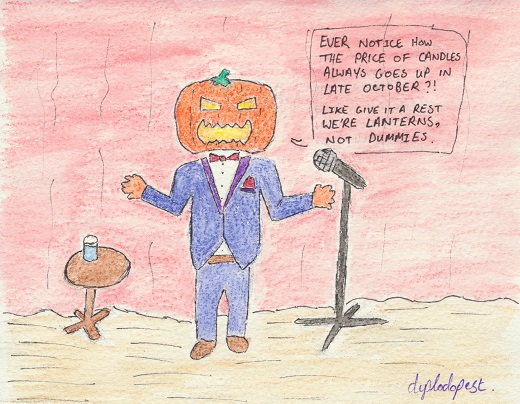
Dad-pumpkin with the jokes.

Two-hundred-and-fifty-nine days have passed since I booked this trip to the United States, and only six remain before it becomes a reality.

When I booked the sole plan was to visit Mac DeMarco and write a great story worthy of peoples’ time. I’ll always hold out hope for the DeMarco plan, but at this stage it seems far more likely to be a three-week stay in NYC.

Fortunately for anyone travelling to this part of the world there never seems to be any shortage of things to do, but this particular trip coincides with some pretty cool events which I’ve detailed below.

Halloween, October 31

The spo0o0o0o0o0okiest time of the year, and while it’s kind of a small deal in Perth I’m told New York goes all out for Halloween. I’m a little stuck for costume ideas and likely to be extremely jet-lagged, but it’s still shaping up to be the realest Halloween ever.

Early costume ideas – Clippy from Microsoft Word; the dancing pumpkin from that viral video; Bookface; Australian. All so spooky.

New York Comedy Festival, November 1-6

I had no idea when I booked the trip, but there are some world class acts taking to the stage for New York Comedy Festival. I managed to get a ticket to a returned soldiers’ benefit featuring Bruce Springsteen, Jerry Seinfeld, Louis CK and Jon Stewart on the same bill at Madison Square Garden. It’s going to be the most patriotic, American thing ever and I really can’t wait to see it.

Seu Jorge David Bowie Tribute, November 12

The Life Aquatic is one of my favourite films, and the prospect of seeing Seu Jorge perform the soundtrack in tribute of David Bowie’s passing feels like one of those once-in-a-lifetime type deals. “Had Seu Jorge not recorded my songs in Portuguese I would never have heard this new level of beauty which he has imbued them with.” – Bowie. This is gonna be really cool.

Book, Oct 28-Nov 16

In spite of everything I just said I think the thing I’m most looking forward to is sitting somewhere and reading a book. The thought of being an anonymous person with plenty of time in a city of millions going about their day-to-day is real drawcard.

And of course…

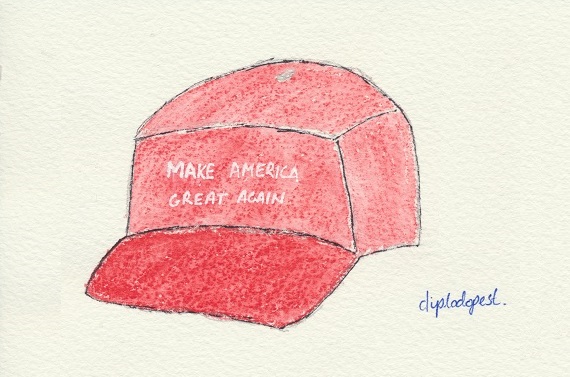
The US Election, November 8 make-america-great-again

Say what you will about the candidates and all the rest, this is one of the biggest political
events the world has seen in quite some time and I’m really excited at the prospect of being in the States as America votes. I’ve spent the past four months trying to work out if it’s OK to ironically buy a Trump campaign hat as a souvenir. It’s a real ethical dilemma.


The other cool thing to come of the trip is this blog.

It’s been a while since I’ve been motivated enough to write in my spare time and I’m finding it really rewarding. Thanks to all of the people who have shown support so far, and I look forward to keeping you posted on the NYC happenings and beyond.

Liners

11102016172739-page-001
Beauty may have killed the beast, but Airbnb killed the travel plans briefly

For the last few weeks I’ve been sleeping lightly, waiting for a post-bedtime email from Mac DeMarco and an invite to extend my US adventure to the west coast.

Last week the phone did go off after midnight. But it wasn’t Mac DeMarco and it wasn’t good news – my New York Airbnb, originally booked in March, had cancelled.

As someone who needs to be extra organised at all times to account for an unavoidable habit of losing personal belongings and stuttering through basic administrative tasks, losing the Airbnb was not a good situation to be in.

It was a sleep depriving bummer which set in motion a brief series of thoughts that ended in my being completely overwhelmed with the whole concept of the trip and everything around it.

Thankfully the thoughts were fleeting, the refund came +10% and the now-booked replacement Airbnb looks far nicer than the original.

Sometimes things work out and sometimes they don’t, but I’m getting a really good vibe from the newly locked in ‘Spacious Bushwick Room A’. The name says it all. It even has a built in wardrobe.

So while the room situation is sorted a little of the hesitation remains. I’m only there three weeks, for some it wouldn’t be a big deal but a few things are honestly weighing on the mind.

I’m not going to sit here and pretend these factors are going to get in the way of a fantastic trip – I’m sure they won’t – nerves are a part of the experience and a human thing which humans tend to do.

The following got me thinking hard:

Travelling solo

It’s not as though I’m going to get through the whole trip without having a conversation (measures in place to avoid this), but there are certain challenges in travelling alone.

How do I get in the photos I take if I’m the one who has to take them? Will someone steal my new camera if I ask them to take one for me? Will I ever be able to prove I was actually there? Does it matter? It probably doesn’t.

Sheer size

It feels kind of like the first day at a new primary school, except instead of 20-25 similarly aged kids wearing weird off-green blazers and scuffed up leather shoes it’s 8.4 million New Yorkers going about their lives.

From previous travels the reality of the situation is a lot like the first day at a new school – the nerves disappear pretty quick and all of a sudden you’re eating bagels and playing handball with the best of them.

For now it’s a little daunting. Working on some mad trick shots so they know I’m legit.

What if it’s not an amazing adventure?

Honestly the Mac stuff feels like a bit of a long shot now but I’m sure I’ll find things to make it so. It was never really about that anyway. Will keep manically checking my sleeves until I find something else up there.

There’s a few more things but I’m backing these to clear in the two weeks before blast off.

PS: The WA state library does free scanning if you’re ever in need.