Nostalgic Wasteland: From Atlantis to Antarctica

A derelict titan of Western Australian tourism, the sheer mention of the Atlantis Marine Park near Two Rocks was once enough to elicit story after story of sunburn, sea mammals and limestone sculptures.

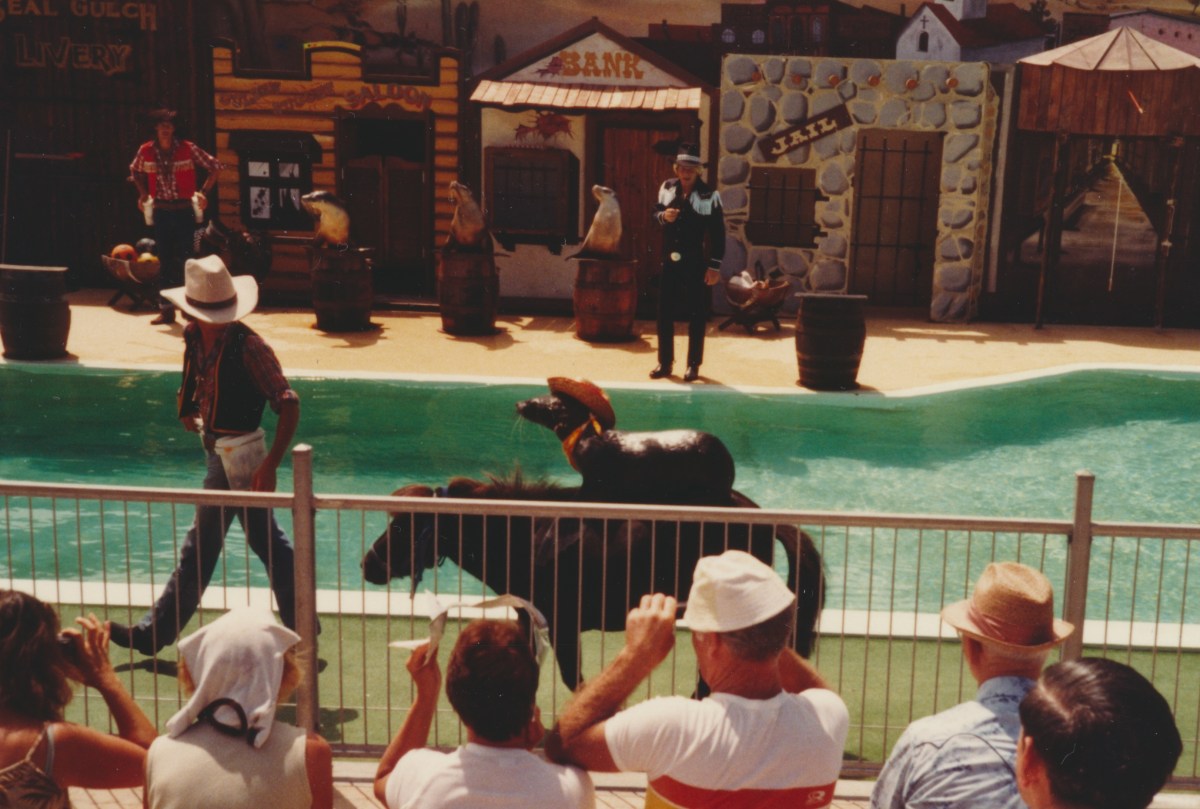
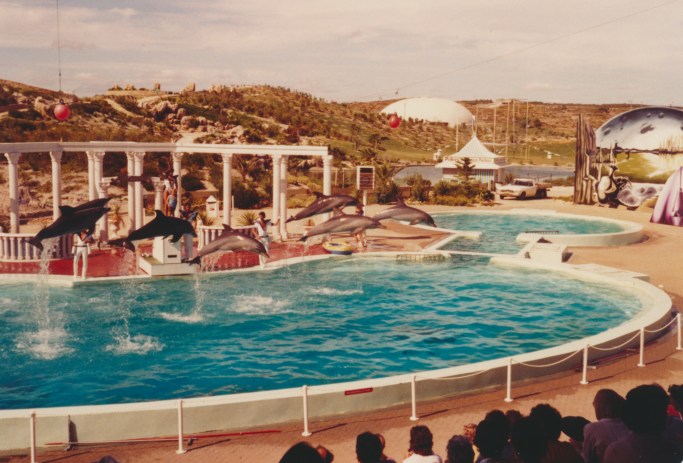
Hundreds of thousands of Western Australians took the trip up the coast to see the park at its peak in the early 80s. What they saw was dolphins flipping on command, seals (occasionally riding horses), turtles, pelicans, penguins, swans – all the things you could expect from an experience once billed ‘the greatest spectacle the west has ever seen’.
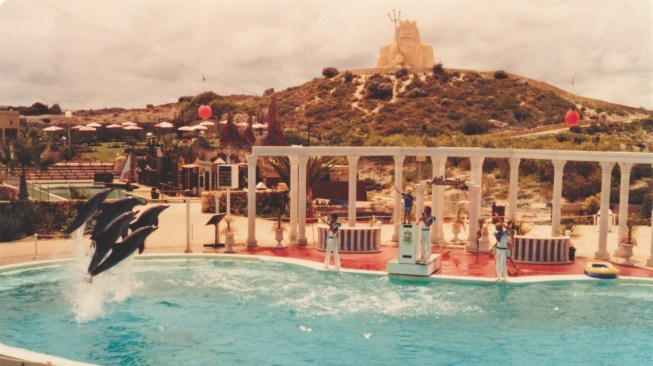
tune2-2

Watercooler conversation and reminiscent Facebook post aside the plight of Atlantis has been largely relegated to the photo albums of the state’s suburban middle class and the social media snaps of their offspring.

To say it was never meant to end this way would be a stretch – Atlantis was essentially set up as a short-sighted land sales technique by the Japanese corporation Tokyu and part of the broader Yanchep Sun City plan which never quite filled its potential.

The plan was to encourage people to recognise the beauty of the coastal land north of Perth and then sink a bunch of cash into it. People certainly flocked north, but the vision once held for the area went largely unfulfilled and forgotten.

The impact on the region wasn’t all short term. In stark contrast to the mythical city after which the park was named, the ruins of Atlantis Marine Park are there for all to see. Two Rocks is so sleepy a fishing town that the land on which the park once stood has sat largely untouched for decades.

OLYMPUS DIGITAL CAMERA
Majestic.

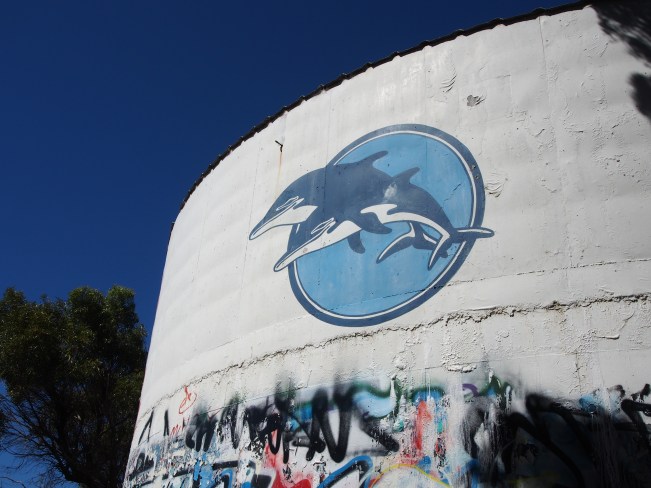
Lizards and snakes roam where dolphins once wowed the crowds, making a home amongst the sea breeze battered sculptures left behind on Tokyu’s departure. Water tanks serve as canvas for local graffiti artists, and the abandoned mattress to land area ratio is surprisingly high.

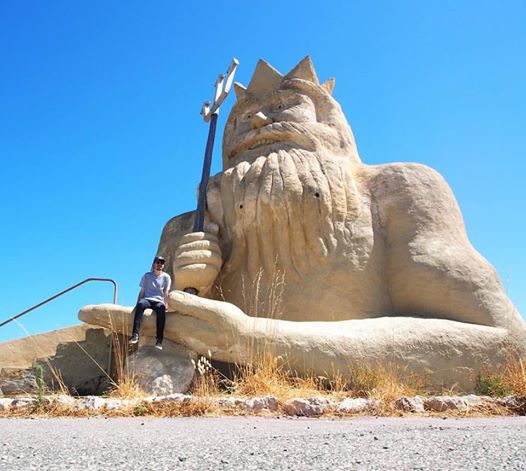
All this sits beneath the watchful eye of a trident wielding, monolithic structure of King Neptune – the park’s semi-tacky pièce de résistance which grimaces in the general direction of the Indian Ocean as a permanent reminder of everything Bond-era WA stood for.

But the Atlantis legacy stretches a little further than the teenager/backpacker/serpent breeding ground the site has become in 2017. Atlantis was once a dolphin breeding ground, and someone had to look after the dolphins.

rolf-2
Rolf Harris was among the celebrities immortalised in limestone at Atlantis.
neppy
Obligatory. 

Atlantis’ Antarctic link

Ok so breeding ground is a bit of a stretch, but dolphins were the star of the show at Atlantis and there were three calves born in the park in the late 80s.

Seven dolphins – Rajah, Nero, Frodo, Rani, Mila, Lulu and Karleen – made up the park’s initial intake and became something of local celebrities.

The dolphins were caught in the nearby ocean by a team of park staff, who would gain the their trust with food and play, before taking a blood sample to test for genetic defects and taking the strongest, healthiest dolphins into captivity.

slwa-history-of-6wf0007
Commercialism and dolphins – hand in hand. Credit: SLWA

Similar means were used to take captive the park’s other mammals – sea lions, seals, penguins and turtles among them. But the dolphins were the stars. Trained to take part in themed shows and getting to know park staff, they became the motif of everything Atlantis stood for.

In the early days the animals were cared for by scruffy-haired Murdoch University science graduate Nick Gales – straight out of school and with little world experience behind him.

For Gales, Atlantis was a springboard to a bigger, better and somewhat ethically conflicting career path. Now a doctor and marine mammal advocate, he serves as the Director of Australia’s Antarctic Division as well as Australia’s Commissioner to the International Whaling Commission. Gales was a Tasmanian Australian of the Year Nominee in 2017 and until recently served as the president of the Society of Marine Mammalogy.

It’s a far cry from work at a water park.

Gales worked as the park vet for its notably successful first four years, before leaving to take up a dream job with the Antarctic Division. However, fate intervened and he ended up back at the sexy Seaworld equivalent in the mid-80s.

“I was really keen to get into applied marine mammal research, and decided I had to add to my vet career with a PhD so I could properly pursue a research career,” he said on the phone from Tasmania.

“I was effectively wooed by the Atlantis Marine Park to come back. It had quite a few problems during the years I’d been away, and they said ‘look, come back and run the veterinary side and the management of the animals and we’ll support you through your PhD.

“It was an offer too good to refuse, really.”
OLYMPUS DIGITAL CAMERA
Atlantis was left behind in the late 80s.

It was in Gales’ second stint at Atlantis that Tokyu Corporation decided the park was no longer economically viable. Rani, Mila and Karleen gave birth within months of each other in 1989, and bigger tanks were required to satisfy the needs of an increasingly environmentally conscious regulatory system.

Gales was commissioned by the state government to run the world-first release program for the Atlantis animals following their decade in captivity. Three of the dolphins failed to adapt to ocean life and wound up at Underwater World, with the remainder set free to a life in the ocean.

It was essentially the last involvement of anyone in the official Atlantis narrative.

The ethics question is one that recurs as we talk over the memories of Atlantis – Gales remembers his experience fondly and is grateful to Tokyu for their financial and professional support of his development. But it wasn’t all smooth sailing in terms of moral conflict at the time, or even in retrospect.

“If you were to propose a modern day Atlantis now it would be massively controversial,” he said.

“It was controversial back then and there were people who quite passionately opposed to dolphins in particular, but also sea lions and other animals being held in captivity. I understand that, and I have to say I probably hold a lot of those views now.

“There was a healthy tension.”
dolphin-2
Education was an upside for Dr Gales.

The show business side of things – commercialising wild animals for entertainment and profit – never sat particularly well. But the graduate turned doctor turned Antarctica boss took a lot of motivation from the merit he saw in the educational side of Atlantis.

“I think the issues, especially then, of using the animals as involuntary ambassadors for their species and driving conservation issues was a very powerful tool, albeit that beyond my control and taste some of the shows were very glitzy and showbiz,” he said.

“That’s not me, however we still did a lot of that base outreach explaining why dolphins are important and why people should care about marine life. I did my PhD on Australian sea lions in the end, and having them there and using them as a way of letting people know how rare they are was very powerful.

“I think that was a strong part of some comfort I had in justifying it. The other part was the enormous lengths we went to to provide leading edge care for the time.”

So is there room for an Atlantis Marine Park in 2017?

“Times have changed a lot,” Dr Gales said.

“Now there are many more effective ways of getting those conservation messages out, and for people to directly interact with wild animals.”

He hasn’t been back to Two Rocks in many years, but Gales still remembers well the place it was and the place it’s come to be.

“My wife and I built our first house up there, so it would be great fun to drive up and look at where the house is and how its developed or changed, or not, over all those intervening years,” he said.
OLYMPUS DIGITAL CAMERA
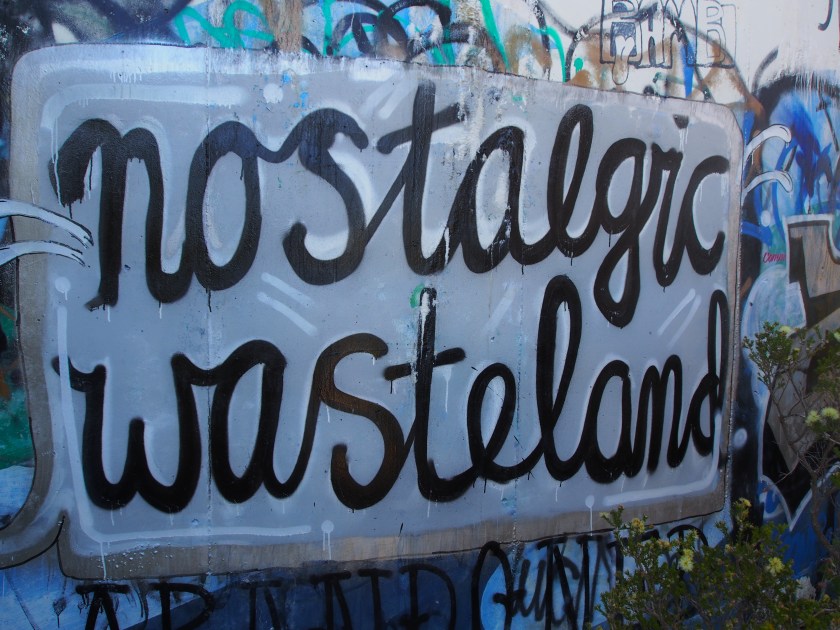
Graffiti on the side of a water tank at the site of the derelict Atlantis Marine Park tells a bigger story. 

“I occasionally see photos taken of the place – the ‘once was Atlantis’ site. It looks a bit sad in a lot of ways.”

ENDS.

Photos of Atlantis Marine Park by Colin McGinn; Photos of Atlantis site in 2017 by Jack McGinn. 
Ceremonial swords and curried egg – a Hutt River story

Graeme Ernest Casley is many things – a tour guide, a handyman, a teacher – but never did the newest sovereign leader in Australia expect to stand where he does today.

Graeme, or Prince Graeme, in keeping with his official title, is the newly crowned sovereign of the Principality of Hutt River – a 70 square kilometre patch of farming land some 500km north of Perth which claims to have seceded from the Australian mainland in 1970 in protest of wheat quotas.

Despite never having received recognition from Australia or most other governments of its right to sovereignty, Prince Graeme’s father Prince Leonard has led Australia’s oldest micronation for 46 years.

It was Leonard who manouvered clauses of international law to protect what he saw as a blatant attempt to steal his land by the Western Australian government – and one stage going to the point of declaring war on the mainland. It was Leonard too who after a few years leading the Principality morphed the public image of he and his family. In the beginning they were farmers fighting for their right to land. After a few years they became royals, dishing out knighthoods and military honours to those deemed worthy of recognition and sporting ceremonial gowns on special occasions.

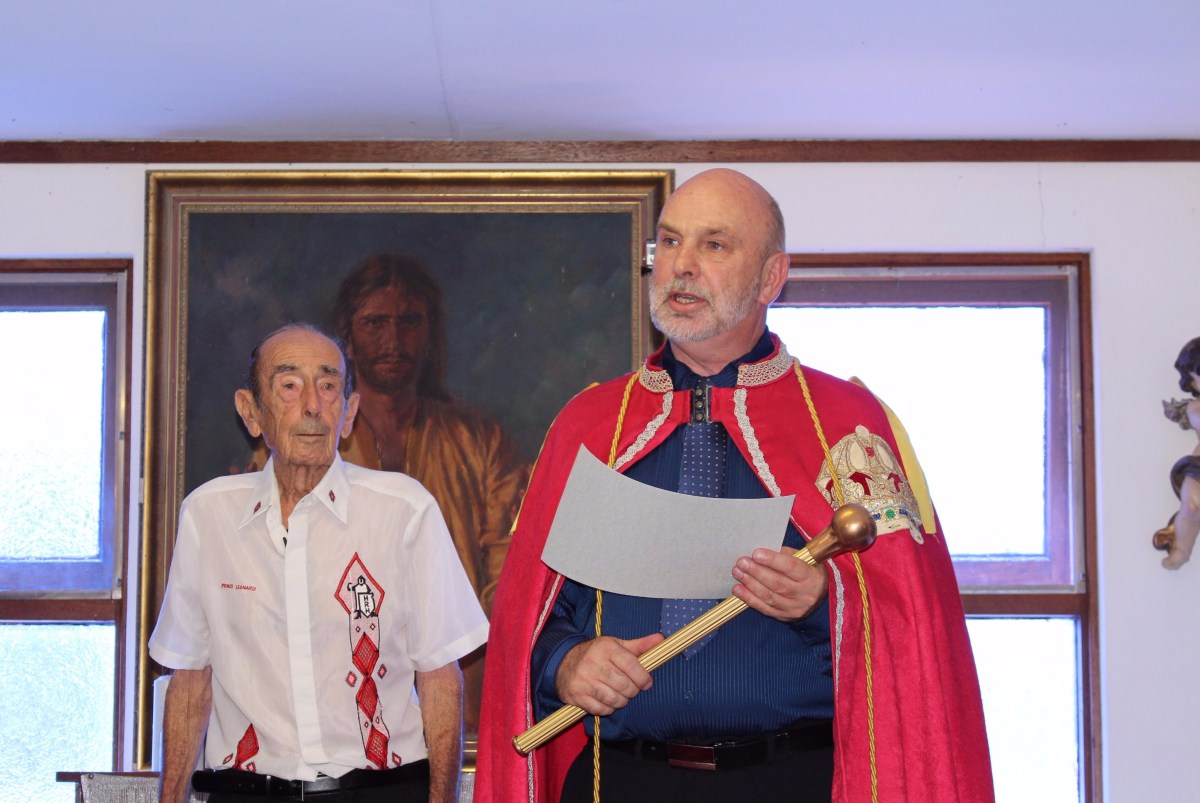
prince-leonard-congratulates-prince-graeme-on-his-inaugrat
Welcome to gown town

Like a real life Darryl Kerrigan, Prince Leonard’s legal battles have become something of WA folklore. But at 91 and with his health deteriorating rapidly, the founding father of Hutt River made the decision to abdicate his position and hand it over to his youngest son, 59. Today was a day for Prince Graeme – the new leader of the Principality of Hutt River.

With inaugurations a hot topic so far in 2017 I drove for more than six hours from Perth to attend Prince Graeme’s special day, to be held in Princess Shirley’s Chapel of Nain at the Principality.

A crowd of around 80 packed the chapel to witness some obscure as fuck history, and they weren’t disappointed. The chapel itself was a heavily religious affair, dominated by paintings of Jesus and crucifixes and blue glass windows a friendly local told me were imported from Italy some years ago. It’s said when closed the glass cools the chapel to the point where the blistering heat outside is barely noticeable. Today the windows were open. The carpet, we were told during the proceedings, is a remnant taken from Buckingham Palace some years ago following a fire. The carpet is red.

Following the Hutt River national anthem, Keith Kerwin’s It’s a Hard Land, and some final recognitions from Prince Leonard the transition is formalised. Prince Leonard’s famous red robe is handed over to Prince Graeme, whose less famous green robe is removed.

The new leader is handed a ceremonial sword and baton, the significance of which is unclear, before posing for photos and inviting guests down to the Hutt River tea room for curried egg sandwiches and cake.

In between, Prince Graeme tells local media of his plans to expand the population of Hutt River. At present it stands at around 30 but feasibility studies suggest it can sustain somewhere in the order of 20,000. He talks legalities – the ATO is currently chasing $2.6 million from the Principality, a request they unsurprisingly intend to fight. Mention of his late mother, Princess Shirley, invokes an emotional pause – it’s clear that the occasion is deeply personal to the Casley family.

a-moment-of-contemplation-from-prince-graeme
The princes address the media.

Before long the press conference was over, formalities were finalised and the gowns removed. As we walked toward the tea room I asked Prince Graeme if he had a moment to sit down for a chat. He obliged, and the two of us ended up back in the chapel. Prince Graeme was thoughtful and candid.

DIPLODOPEST: You’re the first generation to have grown up in Hutt River. What was it like being a teenager and growing up as part of the Principality?

Prince Graeme: We had a house in Perth where we did our schooling, and that was very much normal, run of the mill schooling. But on holidays we’d come back to the Principality and enjoy the farm life of freedom and go venturing and help out with sheep work when you needed to. The unique part for me was as a 13 or 14 year old having media interviewing mum and dad in the living room, from Australia’s Women’s Weekly or BBC. I didn’t realise it at the time but when I’ve looked back my world view grew very quickly just by listening to people and seeing where they come from and what’s happening in other parts of the world. Perth being a very isolated capital, it would have taken many more years to form that big of a world view.

Did it affect your friendships and relationships with people?

The close friends became closer and I still treasure them. People one or two steps removed didn’t seem to understand or didn’t read the history, or hadn’t met mum and dad to know what it was all about. You learn to just be tolerant of them and brush it off. They don’t quite understand where we’re coming from.

Coming home as a teenager and being told your property was going to secede and form its own sovereign identity must have been quite a shock. Was it something you immediately embraced?

It was a shock, but because dad is such a studious person and was doing so many hours in his study on gravity and planetary interactions, we knew he had purpose and a reason why. When he said the farm was at risk from wheat quotas and we needed to secede to protect the property it was accepted that that was the only alternative. He would have thought of other choices if he could. It was very left of centre but it was the only option and I trusted and believed in dad’s understanding of what he was doing.

Has it always been your goal to one day lead the Principality?

Not at all. Since coming back here three years ago and doing a lot of the behind the scenes work, I realised I wanted to do my best to keep Hutt River going. We knew the inevitable would happen with dad and there’d be some sort of change. My natural instinct is to step back, but after these three years seeing dad’s health deteriorate and being given such tutorage it was a natural progression to step forward.

You haven’t always been in Hutt River? What were you doing before you came back?

I was a primary school teacher with the Western Australian Education Department. I travelled the state in that role, but when mum passed away three and a half years ago I retired out of there and came here full time.

Hutt River has a very complex relationship with the WA government – was there any moral conflict for you as an employee of the state government during your time as a school teacher?

It did in the beginning, but I learned to fly under the radar. I paid my taxes on money earned and I was loyal and did my duty for the department, and I also stepped forward and did seminars and workshops for teachers. I felt justified that I wasn’t sneaky or underhanded, I was up front and I paid my expenses and dues as required.

Do you consider yourself an outsider when you venture outside the Principality and into Australia?

Absolutely. Every time I drive out I think I’m going on a journey. Even though it’s a short drive and the roads are the same as our roads it does feel like you’ve entered a slightly different country. I have friends and family in Perth, when you actually touch base face to face with them it’s a lovely feeling of ‘gosh I’ve come that distance’. It is 500km to Perth so that physical travel certainly makes you feel like you’ve come from somewhere else to meet family or do errands.

People outside of Hutt River may consider this to be a bit quirky, or kind of a novelty. Can you see that side of it as well?

Of course. Growing up and living and having had friends have a bit of a dig you get an idea of it. If I was outside the family looking in, it’s certainly a very different and left of centre answer to a problem. I guess that’s the beauty of being right in the middle – you have that understanding of why things happen. A big part of my day is to meet and greet the many visitors that come, and they come with interest and curiosity but some have a bit of a banter about them, where they want to sort of say things like ‘it’s just a tax jaunt’ or ‘crazy, eccentric farmers’ or something. You accept that, you have to be tolerant of people. They don’t fully understand, or want to fully understand. We’ve always been open and speak from our heart.

What’s going to be the hardest part of following in Prince Leonard’s footsteps?

They are such big shoes to fill. He has such a depth of knowledge of constitutional law, he’s lived all those issues. When a new question comes forward or a new event he’s got all that history to relate it to and he can deliver on that. Like all of us when you come to a new job or new situation or you step up, you hope you can bring your skills and character to the things that have been done in the past and make them a bit better. Whilst I don’t have the depth of knowledge or law, I think I’ve got some other skills and dad has made that knowledge available to me so I can find the answers.

Are the robes a day-to-day thing?

They’re ceremonial. Purely ceremonial.

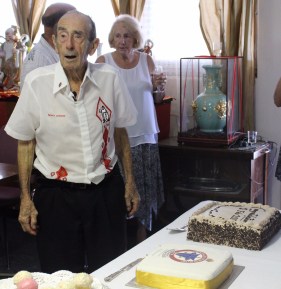
We headed to the tea room, where the mood turned from significant royal occasion to how I imagine a bowls club gala day would feel. On the cutting the cake a frail Prince Leonard, who is battling with emphysema, declared his thanks to a US-based medical machinery company which had donated a breathing apparatus to his cause. Everyone applauded. He and Graeme cut the cakes and everyone applauded again. It was a nice moment befitting of a very odd occasion.

img_5415
Prince Leonard with his cakes

On leaving I noticed a crowd of people around the door of the gift shop/post office. An important building where passports are stamped, visas issued and trinkets sold, the door had been locked from the inside and it was none other than Prince Graeme on all fours with a screwdriver, trying in earnest to wedge open the barrier between some international tourists and the many ceremonial stamps on offer at the Principality.

The door was eventually pried open and Prince Graeme was behind the counter, taking dollars (the Hutt River dollar is tied one-for-one with its Australian equivalent) and offering service with a smile.

All in a day’s work for the new leader of the Principality of Hutt River, I guess.

prince-leonard-sculpture

The kick-on

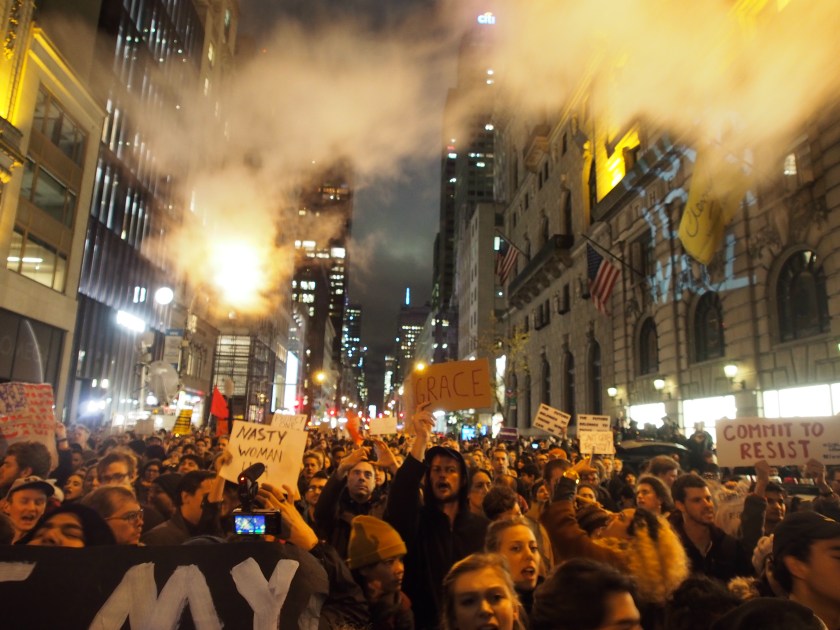
If the New York I experienced in the day following Donald Trump’s remarkable 2016 election win was a city quietly sobbing, by sunset said tears had turned to a uniform roar of anguish.

The protest – international news, no less – started at Union Square at 6pm and navigated some 40 blocks toward Trump Tower, picking up people along the way as it closed the city streets and took on a life of its own.

The chants reverberated through the night sky – ‘F**k Trump, Pence, Christie, ‘the wall’; Black, Latino, Muslim, gay lives matter; Pussy grabs back’ – a blend of the political and social and all expressing extreme distaste with Trump’s conduct and character.

OLYMPUS DIGITAL CAMERAThe closer it got to the tower the more uniform the message. “We reject the president elect,” they shouted loud enough that surely, even from the top of Trump Tower, their presence would have been felt.

Little may come of these protests – not just in New York tonight but across the country – but as a fly-on-the-wall it felt like a moment in history, as though a collective had thrown its arms up in exhaustion at the prospect of its coming years.

I said in my earlier post that I didn’t feel things were different in the street during the day and I stand by that remark. While the people I saw on the subway and outside the tower by day were merely going about their day-to-day lives this was a congregation of the like-minded people whose displeasure at the election result was bolstered by energy of the pack mentality.

OLYMPUS DIGITAL CAMERAThey were primarily but not all ‘millennials’ (for whatever that term has come to mean – I’m talking people in their 20s and 30s). Age aside, the displeasure with target of the evening’s disdain seemingly transcended gender, race and sexuality – it was a united New York, but one united against the man self-tasked with making the nation great again.
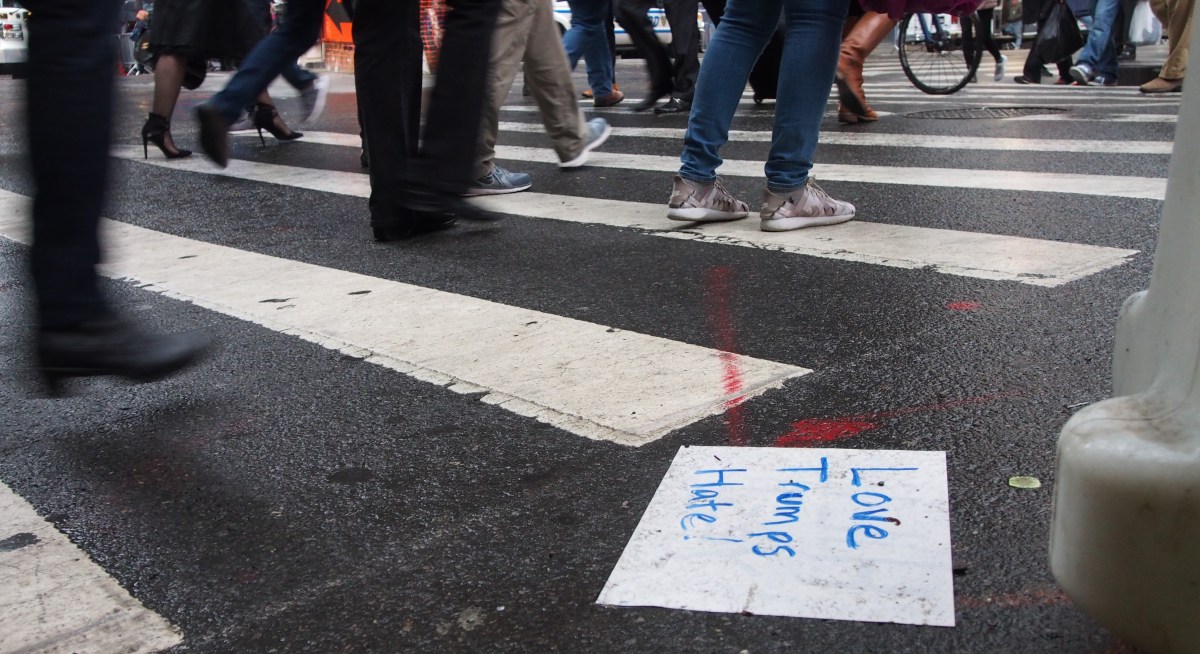
I don’t personally want to delve into the politics of the situation – as a visitor that’s not really my place.

The reality remains that the United States has democratically elected Donald Trump as its 45th President.

What I can tell you is that a lot of people in New York City are disillusioned by the election of their hometown ‘hero’. From what I saw in the streets tonight I’d expect the distaste to last for some time to come.

OLYMPUS DIGITAL CAMERA

I was only there briefly but I took these pictures. The protests continue even now, and are expected to kick on through the night.

Also three posts in two days is too many but time sensitivity is important too, so provided nothing else remarkable happens (no promises) I’ll be toning it down a bit from here.

All photos by Jack McGinn. Please note that all views are opinion and guided only by personal experience as a traveller in New York City. 

The Hangover Pt. Trump

As they went about processing the shock results of last night’s election, the people of New York City woke to a blanket of thick, grey haze which absorbed the city skyline.

OLYMPUS DIGITAL CAMERA
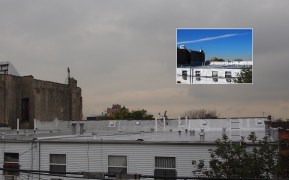
Today vs yesterday (inset)

It’s seemed an apt shift from the blue skies of election day – where yesterday there was optimism of a Clinton victory, today there is cloudiness at the prospect of a Trump future.

For many in the US, the Trump future is the one they want. Pushing aside significant controversy, voters clearly engaged with the Republican’s rhetoric around a lost greatness, promises of a shift to greater control on borders and an anti-establishment movement. I saw a lot of people on social media ask if the people of the US learned anything from the Brexit – they clearly did, and they liked what they saw.

But for New York, a safe Democratic state, most signs suggested this was not a desired result.

I was at the Nets game in Brooklyn last night when the news started to trickle in that Clinton was in for more of a fight than earlier predicted. You could see attentions slowly turn away from the basketball as it went down.

Not even Ja Rule, who was in the crowd and they kept showing on the big screen for some reason, could bring people back to the game.

It was visible again today, in some of the eyes of those riding the subway, the quiet chatter of those looking for solace in the company of others and the occasional person verbalising their concerns to anyone willing to listen.

In the spirit of being a good journalist and a horrible tourist I did my best to seek out trouble and a story today where possible. Overwhelmingly though, it seemed remarkably similar to any other of the last few weeks.

OLYMPUS DIGITAL CAMERA
The media were out in force in NYC today.

The people

There was a lady at Myrtle-Wyckoff Station adamant that the decision to elect Trump would spark a civil war, but her views were largely ignored by a crowd which seemed more intent on quiet reflection than outward expression.

The destination was Trump Tower, where I figured there’d be someone doing something of note. Last night Lady Gaga was there in protest of the election result. Today it was surprisingly placid, though swarming with a significant police presence.

OLYMPUS DIGITAL CAMERA

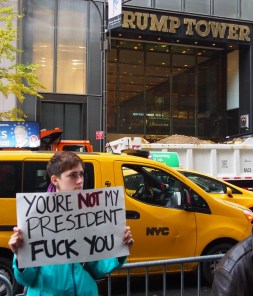
A small group of younger people gathered out front in protest of Trump’s views on sexuality, abortion and gender. One tried to go to work but had to leave at her perceived injustice of the situation – “I told my boss I couldn’t just stand there and do nothing,” she said.

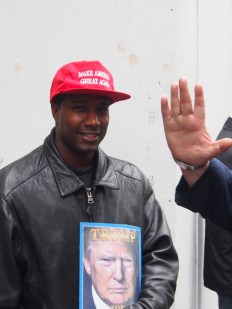
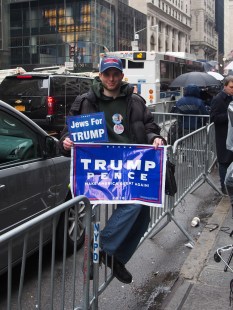
On the other side of the fence were Trump’s fans. Those who turned out seemed to be of various groups – there was Blacks for Trump, Jews for Trump and Christians for Trump – but there didn’t seem to be one united assembly of Trump fans gathered.

Regardless, the word from this side was that the nation had been saved at the hands of the election result the previous evening. The mistrust of Clinton was clear, and the desire to be removed from an establishment politician dominated discussion.

OLYMPUS DIGITAL CAMERA

OLYMPUS DIGITAL CAMERAOLYMPUS DIGITAL CAMERA

One thing I’ve loved about watching the political debate on the street is the mutual respect New Yorkers have displayed for one another. The conversation can be heated, but not once have I seen it get personal or violent despite the size of the topics at play.

The politicians

In a nation of 319 million people stretched across 3.8 million miles of land I find it astounding that the presidential candidates could spend the evening just two blocks apart, but that’s exactly what happened.

OLYMPUS DIGITAL CAMERA
The cars await Hillary and her husband Bill (I got a photo of Bill’s arm but it was blurry).

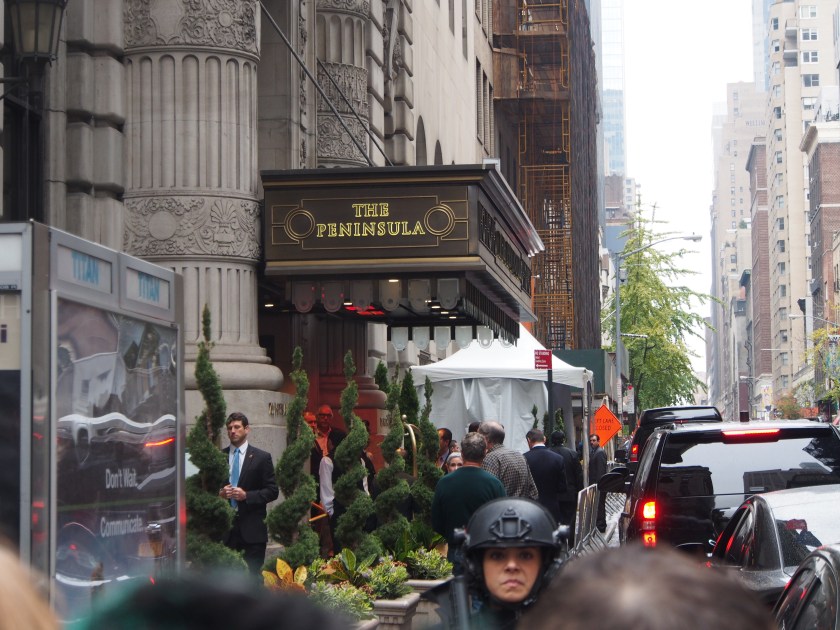
While Trump was holed up in his namesake tower on the corner of 5th Avenue and 56th Street, Clinton spent her election night literally down the road at the Peninsula. They’re on the same street.

On the way to Trump Tower I noticed a crowd, and realised we were standing at the front of the Peninsula. Surely enough, within 10 minutes Hillary and Bill emerged and jumped straight into awaiting cars surrounded by a strong police presence. All things considered the crowd was pretty adoring of the Clintons as they left, and not long after she delivered a speech to fans nearby.

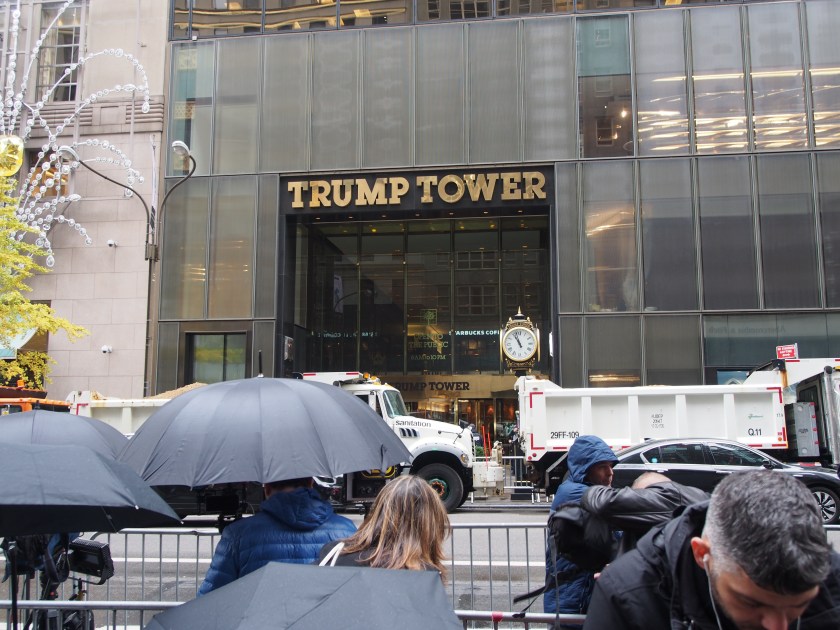
There was no sighting of Trump at the tower, but a large queue of garbage trucks filled with sand formed a barricade of their own on the street in front of the building. It was an unusual sight, but I suppose this is no orthodox politician.

The lesson learned

Every vote counts the same, and at the end of the day America democratically elected Donald J. Trump as its 45th President. Say what you will about the candidate and the motivations – racial, gender, ideological – of the people making this decision, this is democracy at work and the freedom the United States prides itself on.

Will he follow through on his campaign promises? No one really knows. Once the fog clears I suppose we’ll have a better idea.

OLYMPUS DIGITAL CAMERA
Garbage trucks guard Trump Tower in New York the day following his election as US President.

All photos by Jack McGinn. Please note that all views are opinion and guided only by personal experience as a traveller in New York City.